May 10, 2026
How to Find Freelance Work: A Practical Guide for Getting Better Leads
To find freelance work, define the service you sell, build proof that makes hiring you easy, search where your buyers already ask for help, respond quickly to fresh opportunities, and track every lead. Combine outbound pitching, community monitoring, referrals, and repeat-client follow-up instead of relying on one platform.
What should you have ready before looking for freelance work?
Before you search for leads, make it easy for someone to understand what you do and why they should reply.
At minimum, prepare:
-
A clear service statement
Example: “I help SaaS startups turn customer interviews into SEO case studies” is stronger than “I do content.” -
A simple portfolio or proof page
This can be a personal website, Notion page, PDF, GitHub profile, Behance page, Dribbble profile, LinkedIn page, or a short case study folder. -
Three proof points
Include past clients, sample work, measurable results, testimonials, before-and-after examples, or relevant side projects. -
A short reply template
You should be able to respond quickly without sounding generic. Keep it customizable. -
A tracking system
Use a spreadsheet, CRM, notes app, or opportunity dashboard. Track the source, date, contact, status, next step, and follow-up date.
Freelance work usually goes to the person who is relevant, credible, and fast to respond. Having these assets ready helps with all three.
Where can you find freelance work online?
The best places to find freelance work depend on your service and buyer, but most freelancers should use a mix of these sources.
Public communities
Many freelance opportunities appear in public communities before they become formal listings. Look for posts where people ask for help, mention a problem, request recommendations, or announce a project.
Useful places can include:
- Reddit communities related to your niche
- X/Twitter posts and search queries
- Indie maker communities
- Design, developer, writing, marketing, and creator communities
- Public Discord or Slack communities, where accessible
- Niche forums and product communities
Search phrases to monitor:
- “looking for a freelance [service]”
- “need help with [problem]”
- “hiring a contractor”
- “any recommendations for a [role]”
- “paid project”
- “contract [role]”
- “short-term help”
LinkedIn and professional networks
LinkedIn can work well when you use it as a search and relationship tool, not only as a profile page.
Try this workflow:
- Search for posts using terms like “looking for freelance designer” or “contract copywriter.”
- Filter by recent posts.
- Save relevant posts or contacts.
- Reply with a specific note that references the project.
- Follow up if the post is still open after a few days.
Also tell past coworkers, former managers, founders, and peers exactly what kind of freelance work you are taking on. Referrals are often warmer than cold leads.
Freelance platforms and job boards
Freelance platforms and job boards can be useful, especially when you are building early momentum. The downside is competition, platform rules, and sometimes lower-quality posts.
Use them selectively:
- Search for recent listings, not old ones.
- Avoid racing to the bottom on price.
- Look for buyers who describe a real problem clearly.
- Reuse strong proposals, but customize the first few lines.
- Move fast when a listing is fresh.
Direct outreach
Direct outreach is still one of the most controllable ways to find freelance work. Instead of asking “Do you need a freelancer?”, point to a specific problem or opportunity.
For example:
“Hi Maya, I noticed your product pages have strong demos but no comparison pages for high-intent searches. I help B2B SaaS teams create those pages. If improving demo-ready organic traffic is a priority this quarter, I can send over 3 page ideas.”
Good outreach is specific, useful, and easy to ignore without pressure.
How do you choose the right freelance leads?
Not every lead is worth your time. Use a simple filter before replying.
A good freelance opportunity usually has:
- A clear problem or outcome
- A buyer who seems reachable
- A budget signal or business reason to pay
- A timeline that matches your availability
- A scope you can explain and deliver
- A source that looks legitimate
Be careful with posts that are vague, rushed, unpaid, commission-only, or asking for a large amount of free work before a conversation. You do not need to reply to everything. Better filtering helps you spend more energy on leads that fit.
How should you respond to freelance opportunities?
A strong first reply should be short, relevant, and easy to act on.
Use this structure:
-
Reference the project
Show you read the post. -
State your relevant experience
Keep it specific to the problem. -
Include proof
Link to one or two examples, not your entire life story. -
Suggest the next step
Ask a simple question or offer a short call.
Example:
“Hi Jordan, saw your post about needing landing page help before next month’s launch. I’ve written and optimized launch pages for two early-stage SaaS teams, including one that needed clearer demo conversion messaging. Here are two relevant examples: [link] and [link]. If helpful, I can send a quick outline of what I’d change on the current page.”
This works because it is specific, brief, and focused on their need.
How many freelance leads should you pursue each week?
A practical starting target is 20 to 40 qualified leads per week, depending on your service, price point, and availability. The key word is qualified. Sending 100 generic messages to poor-fit leads is usually worse than sending 20 thoughtful replies to relevant ones.
A weekly workflow could look like this:
- Monday: Search communities, job boards, LinkedIn, and saved sources.
- Tuesday: Send tailored replies and direct outreach.
- Wednesday: Follow up on older leads and ask for referrals.
- Thursday: Add one new proof asset or case study.
- Friday: Review what worked and update your tracking system.
Freelance lead generation improves when it becomes a repeatable habit, not a panic activity only when client work slows down.
How can you find fresh freelance opportunities without tab chaos?
A major challenge is that good freelance leads often appear in public sources while you are busy working. By the time you check every community, the best posts may already have many replies.
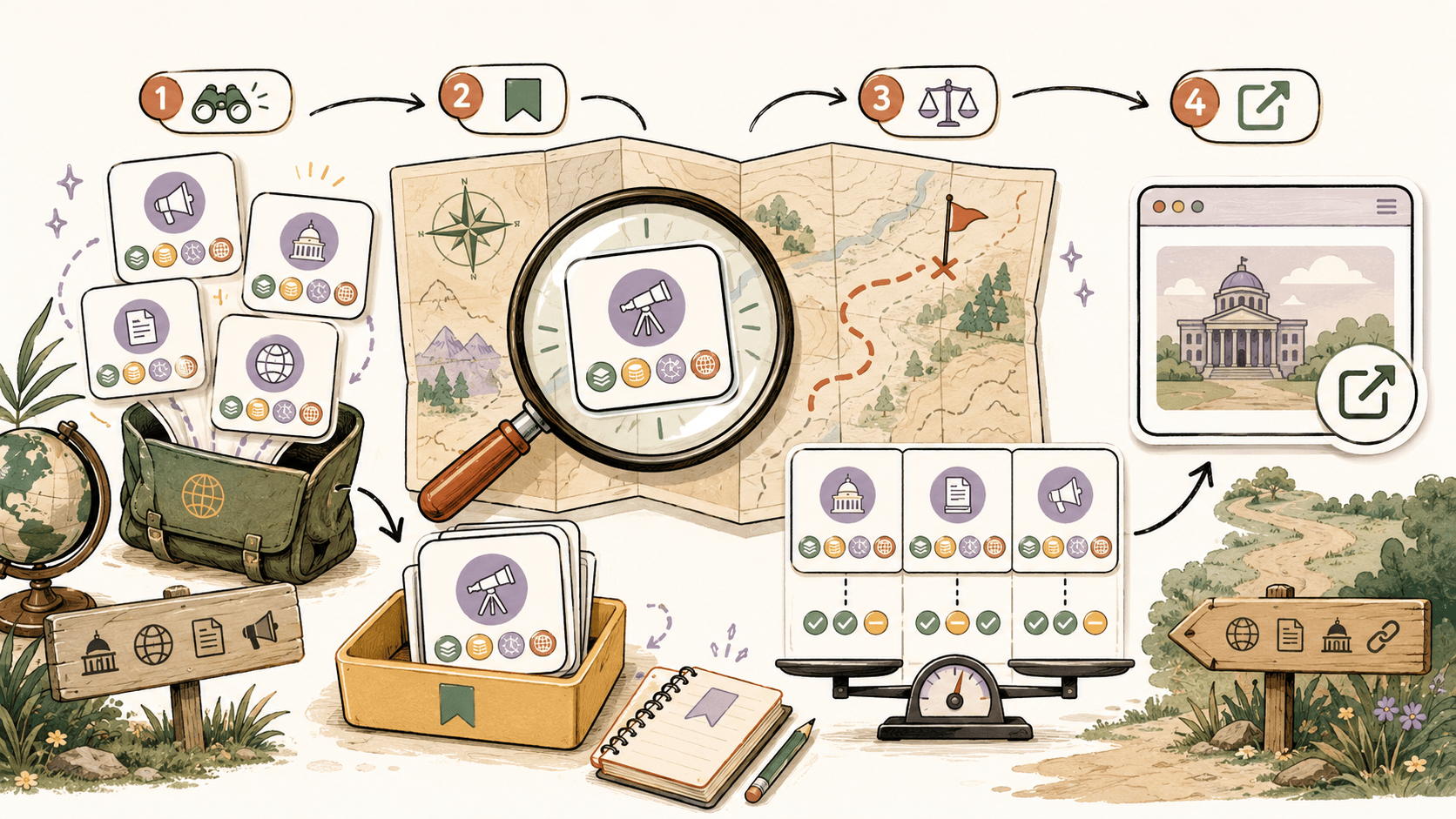
A calmer system is to separate your workflow into three steps:
- Discover: Find fresh public opportunities from relevant sources.
- Save: Keep promising posts in one place so they do not disappear into tabs.
- Respond: Open the original source and apply, pitch, or reply directly.
This is where Sidequestboard can help. Sidequestboard is a curated opportunity discovery dashboard for freelancers, independent workers, and jobseekers who monitor public communities and social platforms for work. It brings fresh public opportunities into one cleaner feed, lets you save interesting posts, and helps you open the original source so you can respond directly.
It is not a marketplace or middleman, and it does not guarantee work. It is useful if your current process involves checking too many tabs, missing fresh posts, or struggling to keep track of leads you want to revisit.
What is the best strategy for finding freelance work long term?
The strongest freelance pipeline usually has more than one channel.
Use this mix:
- Fresh public opportunities for immediate leads
- Direct outreach for control over your pipeline
- Referrals for warmer conversations
- Content or portfolio assets for inbound trust
- Past-client follow-up for repeat work
- Community participation for visibility before people need help
If you only rely on one source, your pipeline can become unpredictable. A balanced system gives you more chances to find work without constantly starting from zero.
CTA
Want a calmer way to monitor fresh public freelance opportunities? Try Sidequestboard and spend less time jumping between tabs and more time pitching the right leads.