May 14, 2026
How to Start Freelancing with No Experience: A Practical Beginner Guide
To start freelancing with no experience, choose one beginner-friendly service, create a few sample projects, package a small starter offer, and look for fresh public opportunities you can respond to quickly. Track each lead, send tailored pitches, learn from replies, and use early projects to build proof.
Can you start freelancing with no experience?
Yes, but it helps to be clear about what “no experience” means. You may not have paid client work yet, but you can still show ability through practice projects, volunteer work, personal projects, school projects, or before-and-after examples.
The goal is not to pretend you are an expert. The goal is to make a small, useful offer that a client can understand and trust.
A beginner freelancer needs three things:
- A specific service you can deliver.
- Proof of ability, even if it is self-created.
- A repeatable way to find and respond to leads.
If you skip the third part, you can spend weeks polishing a profile without ever talking to a real potential client.
What should you offer as a beginner freelancer?
Start with one narrow service instead of trying to sell everything. A narrow offer is easier to explain, easier to price, and easier for a first client to say yes to.
Beginner-friendly freelance services can include:
- Writing short blog posts, newsletters, product descriptions, or social captions.
- Editing and proofreading simple content.
- Designing basic social media graphics, thumbnails, or pitch decks.
- Setting up simple websites or landing pages using no-code tools.
- Data entry, spreadsheet cleanup, or online research.
- Virtual assistant tasks such as inbox cleanup, scheduling, or document formatting.
- Short-form video editing or repurposing long videos into clips.
- Basic SEO cleanup, content formatting, or publishing support.
Pick a service based on what you can practice quickly and deliver reliably. If you are unsure, choose a service where the first version can be small: one landing page, five graphics, one edited document, ten researched leads, or one cleaned spreadsheet.
How do you build a portfolio without clients?
You do not need a long client list to create proof. You need examples that show what a buyer would get if they hired you.
Create two or three sample projects around realistic client problems. For example:
- If you want to write, create a sample blog post for a fictional local business.
- If you want to design, redesign a social post, flyer, or landing page concept.
- If you want to edit video, take public practice footage or your own footage and create a short before-and-after example.
- If you want to do research, create a sample spreadsheet of categorized prospects for a pretend business type.
- If you want to be a virtual assistant, create a mock process document, inbox organization example, or calendar planning template.
Keep each sample simple. Add a short explanation: the problem, what you changed, and what the final result helps with. A clear sample is more useful than a pretty portfolio with no context.
If you use real brands, logos, screenshots, or public content in a sample, be careful not to imply they hired you. Label it as a practice project or concept.
How should you package your first freelance offer?
A beginner offer should be small enough for a client to try without a huge commitment. Avoid vague offers like “I can help with marketing” or “I do design.” Be specific.
Use this simple format:
I help [type of person or business] with [specific task] so they can [clear result].
Examples:
- “I help small business owners turn rough notes into polished blog posts.”
- “I help creators repurpose long videos into short social clips.”
- “I help solo founders clean and organize spreadsheets so they can make faster decisions.”
- “I help local service businesses create simple social media graphics for weekly promotions.”
Then define the scope:
- What is included?
- What is not included?
- How long will it take?
- What does the client need to provide?
- What will they receive at the end?
For your first few projects, a small fixed scope is often easier than an open-ended hourly arrangement. Readers should verify current platform rules, tax obligations, and payment requirements with official sources or qualified professionals, especially if freelancing across borders.
Where can you find your first freelance opportunities?
Beginners often make the mistake of only building profiles and waiting. A better approach is to look for fresh public posts where people are already asking for help.
Places to look can include:
- Public communities where founders, creators, small businesses, or jobseekers post needs.
- Freelance and job boards with contract or project-based listings.
- Social platforms where people ask for recommendations or urgent help.
- Local business groups and niche communities.
- Creator, startup, or industry-specific forums.
When you search, use terms that match your offer. For example:
- “need a video editor”
- “looking for a blog writer”
- “help with spreadsheet”
- “hiring freelance designer”
- “need virtual assistant”
- “one-time project”
- “contract writer”
Freshness matters. Many public opportunities get crowded quickly. A calm daily workflow is better than randomly checking ten tabs whenever you feel behind.
How can Sidequestboard help you find first-client leads?
Once you know your starter offer, your next problem is lead discovery: finding relevant public opportunities while they are still fresh, without living in endless tabs.
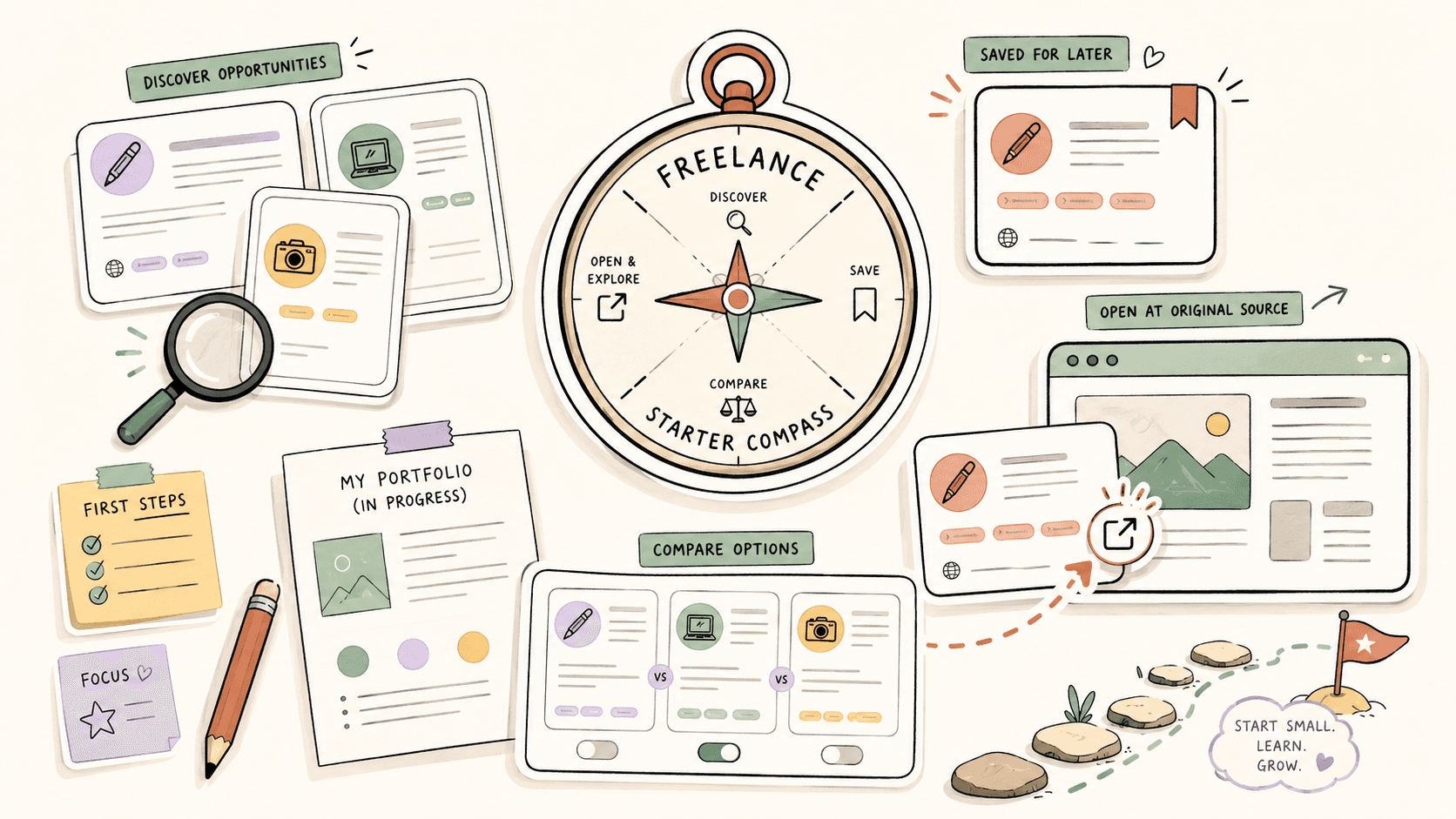
Sidequestboard is built for that workflow. It helps freelancers and independent workers discover public job, freelance, and opportunity posts in one cleaner feed, save interesting leads, open the original source, and respond directly where the opportunity was posted.
For a beginner freelancer, that can turn your search into a simple routine:
- Check a cleaner feed of public opportunities.
- Save posts that match your starter offer.
- Open the original source to read the full context.
- Send a tailored reply or application.
- Track what you responded to and follow up when appropriate.
Sidequestboard does not guarantee clients or replace your pitch. It helps reduce the searching chaos so you can spend more time responding to relevant opportunities.
How should you pitch your first client?
A good beginner pitch is short, specific, and focused on the client’s problem. Do not lead with a long life story. Show that you understood the post.
Use this structure:
- Mention the specific need. Show you read the post.
- Say how you can help. Connect your service to their problem.
- Share one proof point. Link to a relevant sample or describe a similar practice project.
- Suggest the next step. Ask a simple question or offer to send a short plan.
Example pitch:
Hi, I saw you’re looking for help turning rough notes into blog posts. I can help draft a clean 800–1,000 word post from your outline and format it for publishing. Here’s a sample practice post I created for a similar business topic: [link]. If helpful, I can send a suggested structure for your first post.
Keep it honest. If you are new, you can say you are building your freelance portfolio, but do not make your lack of experience the main message. Focus on what you can deliver.
How should you price your first freelance project?
There is no universal beginner rate that fits every skill, country, industry, or client. Pricing changes by service, complexity, deadline, and market. Readers should verify current platform rules, local tax obligations, and payment norms from official or professional sources.
For your first projects, think in terms of scope and risk:
- Start with a small deliverable.
- Avoid unlimited revisions.
- Define what happens if the client changes direction.
- Ask for clear source materials before starting.
- Use a payment method or platform process you understand.
A simple starter project can help you learn how clients communicate, how long the work actually takes, and what to improve before taking on larger projects.
What red flags should beginner freelancers avoid?
Be careful with opportunities that feel urgent but unclear. Common red flags include:
- The client refuses to explain the actual work.
- The project requires unpaid test work that looks like a real deliverable.
- The client asks you to pay money before you can work.
- The payment terms are vague or constantly changing.
- The client wants to move to unusual payment methods you do not understand.
- The client pressures you to start before agreeing on scope.
- The opportunity sounds too good to be true compared with the work required.
Not every difficult client is a scam, but beginners should protect their time. When in doubt, slow down, ask clarifying questions, and verify the source.
What should you do after your first few pitches?
Freelancing improves through feedback loops. Track every lead you respond to so you can see what is working.
Create a simple tracker with:
- Opportunity source.
- Date found.
- Service offered.
- Pitch sent.
- Response status.
- Follow-up date.
- Notes on why it did or did not fit.
If nobody replies, improve one variable at a time: your offer, your samples, your pitch, or the kinds of leads you choose. Do not rewrite everything after one rejection. Look for patterns.
Your first goal is not to become a full-time freelancer overnight. Your first goal is to get real conversations, complete small projects, and turn those results into stronger proof.
FAQ
What is the easiest freelance work to start with no experience?
The easiest option depends on your existing skills, but beginners often start with small, clear tasks such as writing, editing, data cleanup, research, basic design, virtual assistant work, or simple video editing. Choose something you can practice and show through samples.
Do I need a portfolio before applying to freelance jobs?
You do not need paid client work, but you should have some proof. Two or three sample projects are better than sending a pitch with no examples. Label practice work clearly and explain what problem each sample solves.
How many freelance pitches should a beginner send?
There is no guaranteed number. Focus on consistent, targeted outreach instead of mass-copying the same message. A smaller number of relevant, personalized pitches usually teaches you more than a large number of generic ones.
Can Sidequestboard guarantee my first freelance client?
No. Sidequestboard helps you discover, save, and open public opportunities from original sources. You still need to evaluate each lead, send a strong response, agree on scope, and decide whether the opportunity is right for you.