July 11, 2026

I Cried During My Job Interview. What Should I Do Next?

If you cried during a job interview, send a brief follow-up within 24 hours, acknowledge the moment without overexplaining, restate your interest if you still want the job, and keep applying elsewhere. One emotional moment rarely defines your career, but your recovery plan matters.

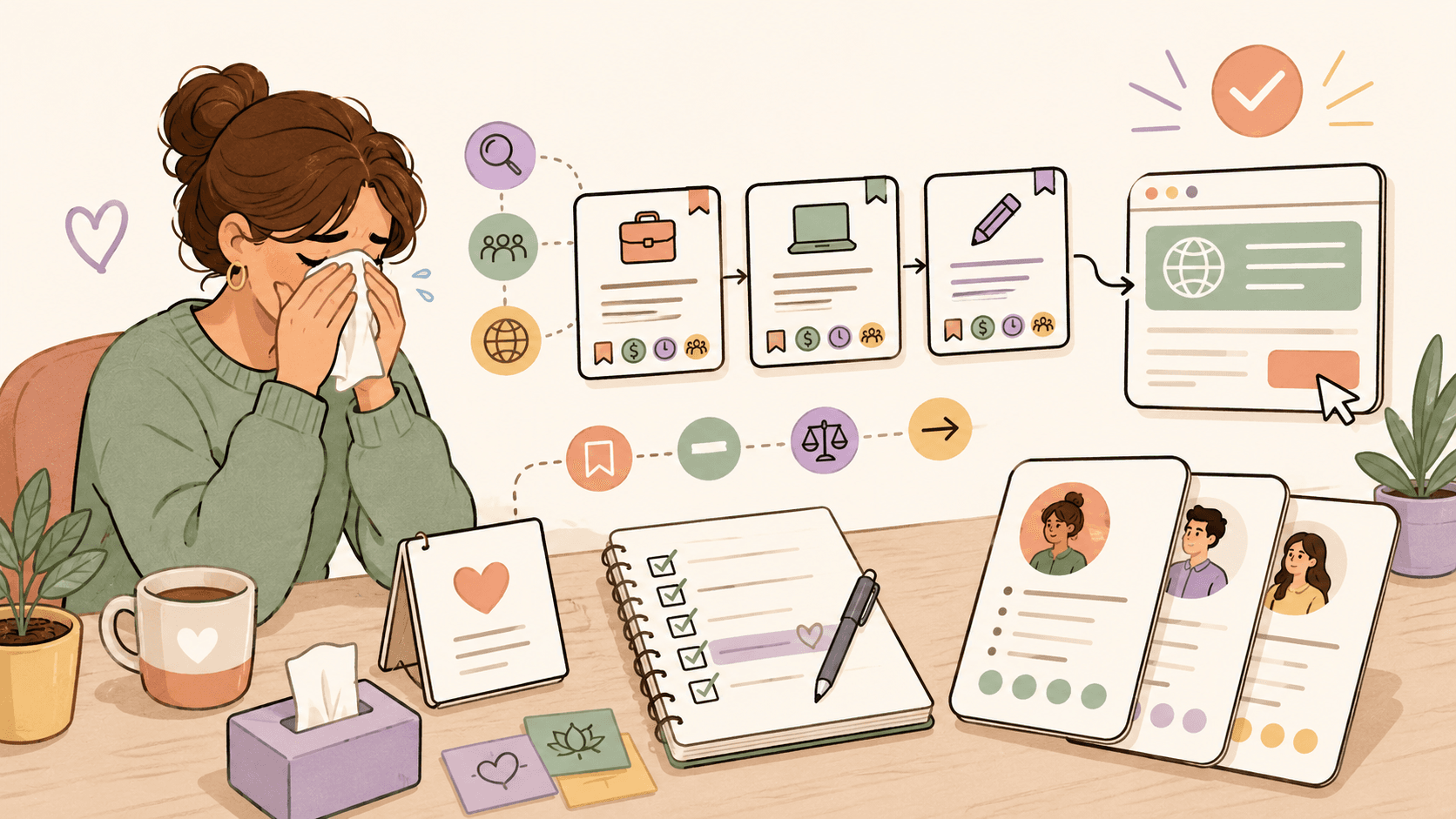
Editorial illustration for I Cried During My Job Interview. What Should I Do Next?
A practical visual guide to comparing fresh work opportunities before applying or pitching.

Did crying during a job interview ruin your chances?

Probably not automatically. Crying in an interview can feel catastrophic because interviews compress money stress, self-worth, rejection history, and performance pressure into one short conversation. But hiring decisions usually depend on more than one moment: your experience, how you handled the conversation afterward, role fit, timing, compensation, and whether the interviewer believes you can do the work.

A recent r/jobs discussion titled “I cried during my job interview” drew more than 1,300 upvotes and 500 comments, which is a strong signal that this is not a rare job-search fear. People cry in interviews after layoffs, burnout, toxic workplaces, long unemployment, grief, financial pressure, or being asked a question that hits too close to home.

The goal now is not to erase what happened. You cannot. The goal is to respond calmly, decide whether the role is still right for you, and keep your search moving so one interview does not become the entire story.

Do this first: open a blank note in Notion, Google Docs, or Apple Notes and write three facts only: what question triggered the tears, how the interviewer responded, and whether you still want the role.

What should you do in the first hour after crying in an interview?

Do not immediately send a long apology. The first hour is for recovery, not damage control. Your nervous system is still reacting, and rushed follow-ups often turn into overexplaining.

Use this quick reset:

  1. Write down what happened while it is fresh.
  2. Separate facts from assumptions.
  3. Decide whether the interview revealed a red flag.
  4. Draft a follow-up, but do not send it until you reread it.
  5. Apply to at least one other opportunity the same day.

Here is the difference between fact and assumption:

  • Fact: “I teared up when asked why I left my last job.”
  • Assumption: “They think I am unstable and will never hire me.”
  • Fact: “The interviewer paused, offered water, and continued the interview.”
  • Assumption: “They were only being polite because they rejected me already.”

This matters because your next move should be based on what happened, not what anxiety is inventing.

If the interviewer was kind, professional, and continued asking relevant questions, the opportunity may still be alive. If they became mocking, cold, invasive, or kept pushing into personal details, that tells you something useful about the workplace.

Immediate action: wait at least 30 to 60 minutes, then write a short follow-up email in a separate document before sending anything.

What follow-up email should you send after crying during an interview?

Send a concise follow-up within 24 hours if you still want the role. Do not write a confession letter. Do not give a full medical, family, workplace, or financial backstory. The best follow-up acknowledges the moment lightly, returns focus to the job, and restates your fit.

Use this template:

Subject: Thank you for today’s conversation

Hi [Name],

Thank you for taking the time to speak with me today about the [Role Title] position. I also appreciate your patience during the moment when I became emotional. I care a lot about finding the right next role, and I’m still very interested in the opportunity.

Our conversation reinforced my interest in [specific responsibility, team, or project]. My experience with [specific skill or result] would help me contribute to [specific company need].

Thanks again for your time, [Your Name]

A stronger version includes one concrete job-related detail from the interview. For example:

“Your point about needing someone who can clean up the customer onboarding workflow stood out to me. In my last role, I rebuilt a 12-step onboarding checklist in Trello and reduced missed handoffs between sales and support.”

That sentence does more repair work than a paragraph of apologies because it moves the reader back to competence.

Avoid these lines:

  • “I am so embarrassed and I hope you can forgive me.”
  • “I promise I am not usually like that.”
  • “Please do not let this affect your decision.”
  • “I have been under extreme stress because...”

Those lines make the emotional moment bigger. Keep the email short enough that the interviewer can read it in under one minute.

Immediate action: send a 4 to 6 sentence follow-up that acknowledges the moment once, then pivots to your qualifications.

How can you explain the moment if they ask about it later?

If you get a second interview or recruiter call, prepare a calm one-sentence explanation. The goal is to show self-awareness without inviting a deep personal discussion.

Good options:

  • “I was caught off guard by that question because the transition from my last role was difficult, but I’ve reflected on it and I’m ready to focus on what I can contribute here.”
  • “That moment came from how much I care about finding a healthy, long-term fit. I appreciate your patience, and I’m confident in my ability to do the work.”
  • “I became emotional discussing a challenging professional period. I’ve taken time to process it, and I’m ready to move forward.”

Then redirect:

“Would it be helpful if I walked through how I handled similar responsibilities in my last role?”

This is the same technique experienced candidates use when explaining a layoff, resume gap, or difficult manager: answer briefly, then return to evidence.

For example, if the role is customer success, pivot into metrics: “In my last customer support role, I handled 40 to 60 tickets a day in Zendesk and maintained a 95% CSAT score.” If the role is operations, pivot into systems: “I managed weekly project tracking in Asana and built SOPs that reduced repeated Slack questions.”

Immediate action: write your one-sentence explanation and practice saying it out loud twice before any next call.

Should you still want the job after crying in the interview?

Maybe. The interviewer’s reaction gives you useful information.

Green flags:

  • They paused without making you feel ashamed.
  • They offered a moment, water, or a reset.
  • They returned to job-related questions.
  • They did not pressure you for private details.
  • They treated you like a capable adult after the moment passed.

Red flags:

  • They mocked, judged, or lectured you.
  • They kept asking personal questions unrelated to the role.
  • They framed normal stress as weakness.
  • They used the moment to push you into accepting lower pay or worse conditions.
  • They seemed more interested in your vulnerability than your skills.

A practical way to decide: score the interview in Notion or a spreadsheet across five categories, each from 1 to 5: role fit, manager behavior, pay range, workload clarity, and growth potential. If the emotional moment happened because the interviewer asked a reasonable but sensitive question, the job may still be fine. If it happened because the interview felt hostile or manipulative, pay attention.

Use r/personalfinance, which has around 20M members, for the money side of the decision. Search for posts about emergency funds, income comparison, and job offer tradeoffs. If you are considering a lower-paying role because you feel desperate after an emotional interview, compare the offer against rent, debt payments, insurance, commuting costs, and savings runway before accepting.

Immediate action: make a 5-category interview scorecard before deciding whether to keep pursuing the role.

How do you keep one bad interview from stopping your job search?

The best emotional recovery is momentum. Not frantic applying. Structured momentum.

Use a simple 3-list system in Trello, Notion, or Google Sheets:

  • Applied
  • Interviewing
  • Follow-up needed

For each opportunity, track: company, role, source, date applied, contact person, next step, and follow-up date. After a painful interview, your brain may want to avoid applications completely. A visible tracker makes the next step smaller.

A realistic weekly target for many jobseekers is 10 to 20 quality applications, not 100 rushed ones. For freelance or contract work, 5 to 10 tailored pitches can outperform 50 generic replies, especially when the post is fresh and your response includes proof.

Here is a simple recovery workflow for the same day:

  1. Send the short follow-up email.
  2. Log the interview in your tracker.
  3. Apply to two roles on LinkedIn or Indeed that closely match your experience.
  4. Check one community source for fresh public opportunities.
  5. Stop for the day after completing those actions.

Do not use the interview as evidence that you should disappear for a week. Also do not punish yourself by applying for everything until midnight. The middle path is better: send the follow-up, take two targeted actions, then rest.

Immediate action: add three fresh opportunities to your tracker today, even if you only apply to one.

What if crying happened because you are under financial pressure?

Financial pressure makes interviews harder because every question feels tied to survival. If you need income while you continue the search, consider short-term income strategies that do not require abandoning your main job hunt.

The research-backed ranges to keep in mind:

  • Freelance in your current skill: first pay often takes 1 to 4 weeks, with potential around $500 to $5,000 per month.
  • Sell a digital product, such as a template, course, or guide: first pay often takes 2 to 6 weeks, with potential around $100 to $10,000 per month.
  • Part-time remote contract work: first pay often takes 1 to 3 weeks, with potential around $500 to $3,000 per month.
  • Weekend gig work, such as delivery or local tasks: first pay can happen in 1 to 3 days, with potential around $200 to $1,500 per month.

Use r/beermoney, which has around 1.5M members, for quick extra income ideas. It is useful for small, fast-pay options, but do not confuse survey income with a full replacement for employment. Use r/sidehustle, which has around 1.2M members, for side income strategies and examples from people testing service businesses, local gigs, content products, and simple reselling.

Concrete scenario: say you are a laid-off marketing coordinator and the interview made you cry because you have two months of savings left. A practical bridge plan could be:

  • Offer freelance email newsletter cleanup to small businesses for $150 to $400 per project.
  • Build a simple Canva or Notion content calendar template and sell it for $9 to $29.
  • Apply for part-time remote contract coordinator roles that pay within 1 to 3 weeks.
  • Use weekend delivery or task work only as a short-term cash buffer.

That plan protects your job search from desperation. You are not trying to build a perfect business overnight. You are buying breathing room.

Immediate action: choose one short-term income path based on fastest pay, not ego. If rent is due soon, weekend gig work may beat a digital product idea that takes 6 weeks to validate.

How can you find calmer opportunities after an interview setback?

After a rough interview, the usual job-search routine can feel brutal: LinkedIn tabs, Indeed alerts, company career pages, Reddit communities, Discord servers, X/Twitter posts, and saved screenshots scattered everywhere. The problem is not just finding roles. It is finding relevant opportunities while they are still fresh and keeping track of what deserves a response.

A practical manual workflow looks like this:

  1. Check LinkedIn for roles posted in the last 24 hours.
  2. Search Indeed with your target title and remote or local filters.
  3. Browse r/jobs for interview and job-search patterns, not direct leads.
  4. Use r/personalfinance to sanity-check offer decisions and income tradeoffs.
  5. Check r/beermoney or r/sidehustle only if you need temporary income ideas.
  6. Save promising leads in Notion, Trello, or Google Sheets.
  7. Respond to fresh posts before they go cold.

Walkthrough example: if you are a junior web developer, you might search LinkedIn for “junior frontend developer remote,” filter by past 24 hours, save three roles, then check public communities where founders or solo builders sometimes mention project help. Before responding, check whether the post includes scope, budget, timeline, and a real way to contact the poster. Then send a short response with one portfolio link, one relevant project, and one clear next step.

This is where Sidequestboard can help if your problem is tab chaos. Sidequestboard is a curated job and opportunity discovery dashboard for fresh public opportunities from communities and social platforms. You can use it to monitor a cleaner feed, save relevant opportunities, open the original source, and apply or respond directly there. It is not a marketplace, not a recruiting agency, and it does not guarantee work. It simply gives you a calmer way to discover and track public opportunities so you can spend more energy applying, pitching, and recovering from setbacks.

Immediate action: replace one daily “random scrolling” block with a 30-minute opportunity review and save only roles you can realistically act on within 24 hours.

What should your next interview plan look like?

Before your next interview, prepare for the questions most likely to trigger emotion. For many jobseekers, those are:

  • “Why did you leave your last job?”
  • “Tell me about a conflict with a manager.”
  • “Why is there a gap on your resume?”
  • “What are your salary expectations?”
  • “Why are you looking right now?”

Write a 30-second answer for each. Keep it factual, forward-looking, and connected to the role.

Example for leaving a difficult job:

“My last role helped me build strong client communication and operations skills, but the structure changed in a way that no longer matched the work I do best. I’m now looking for a role where I can use those skills in a clearer, more collaborative environment.”

Example for a resume gap:

“I took time to reset after a transition and focus on the right next move. During that period, I kept my skills active through freelance projects and continued learning in [tool or skill]. I’m ready to return to a team environment.”

Practice on Google Meet, Zoom, or even your phone’s voice memo app. You do not need to sound robotic. You need to hear yourself get through the answer without being surprised by your own words.

Also prepare two grounding tools:

  • A written note beside your laptop with three bullet points: “Pause. Breathe. Answer the question asked.”
  • A glass of water so you can take a natural pause before answering.

Immediate action: record yourself answering “Why did you leave your last job?” and trim the answer until it is under 45 seconds.

How do you turn this into a stronger job-search system?

Crying in an interview feels like a personal failure, but it is often a signal that your search system needs more support. A stronger system gives you more options, less panic, and fewer moments where one conversation feels like your only chance.

Build your system around four weekly blocks:

  1. Applications: 10 to 20 targeted roles on LinkedIn, Indeed, company pages, or public opportunity sources.
  2. Follow-ups: short emails 5 to 7 business days after applying or interviewing.
  3. Income backup: one realistic short-term path from r/beermoney, r/sidehustle, freelance work, contract work, or weekend gig work.
  4. Financial clarity: review your runway and decisions using r/personalfinance-style budgeting logic.

If you freelance or want contract work, add a pitching block. For example, a designer could pitch 5 small businesses per week with a $300 landing page audit offer. A writer could pitch 5 newsletter operators with a $150 content refresh. A developer could respond to fresh public posts with a tight message: “I can help with [specific issue]. Here is a similar project. I’m available this week for a quick call.”

Sidequestboard fits into the discovery part of this system. Instead of manually checking too many public communities and social platforms, you can use one calmer feed to find fresh opportunities, save the ones worth pursuing, and open the original source when you are ready to apply or respond.

Immediate action: set a weekly calendar block called “Opportunity review” and treat it like an interview. Show up, review fresh posts, save relevant ones, and act before they get stale.

What should you remember if you cried during a job interview?

Remember this: one emotional moment is data, not a verdict. It may tell you that you care deeply, that your last job hurt you, that your finances are tight, or that the interviewer touched a sensitive topic. It does not prove you are unemployable.

Your next steps are simple:

  • Send a short follow-up if you still want the role.
  • Prepare a one-sentence explanation in case it comes up again.
  • Decide whether the interviewer’s response was a green flag or red flag.
  • Keep applying so this interview is not your only active option.
  • Build an income and opportunity system that lowers the pressure on each interview.

If your current search involves too many tabs, scattered saved posts, and missed opportunities, use a calmer workflow. Track roles, respond faster, and give yourself more chances than one interview room can provide.

Immediate action: send the follow-up, log the interview, and find one fresh opportunity today.

Looking for fresher freelance leads?

Sidequest pulls public opportunities into one calmer feed, so you can save leads and apply at the original source.

Browse opportunities

Latest articles