July 21, 2026
How to Evaluate Freelance Leads from Public Communities Before You Pitch
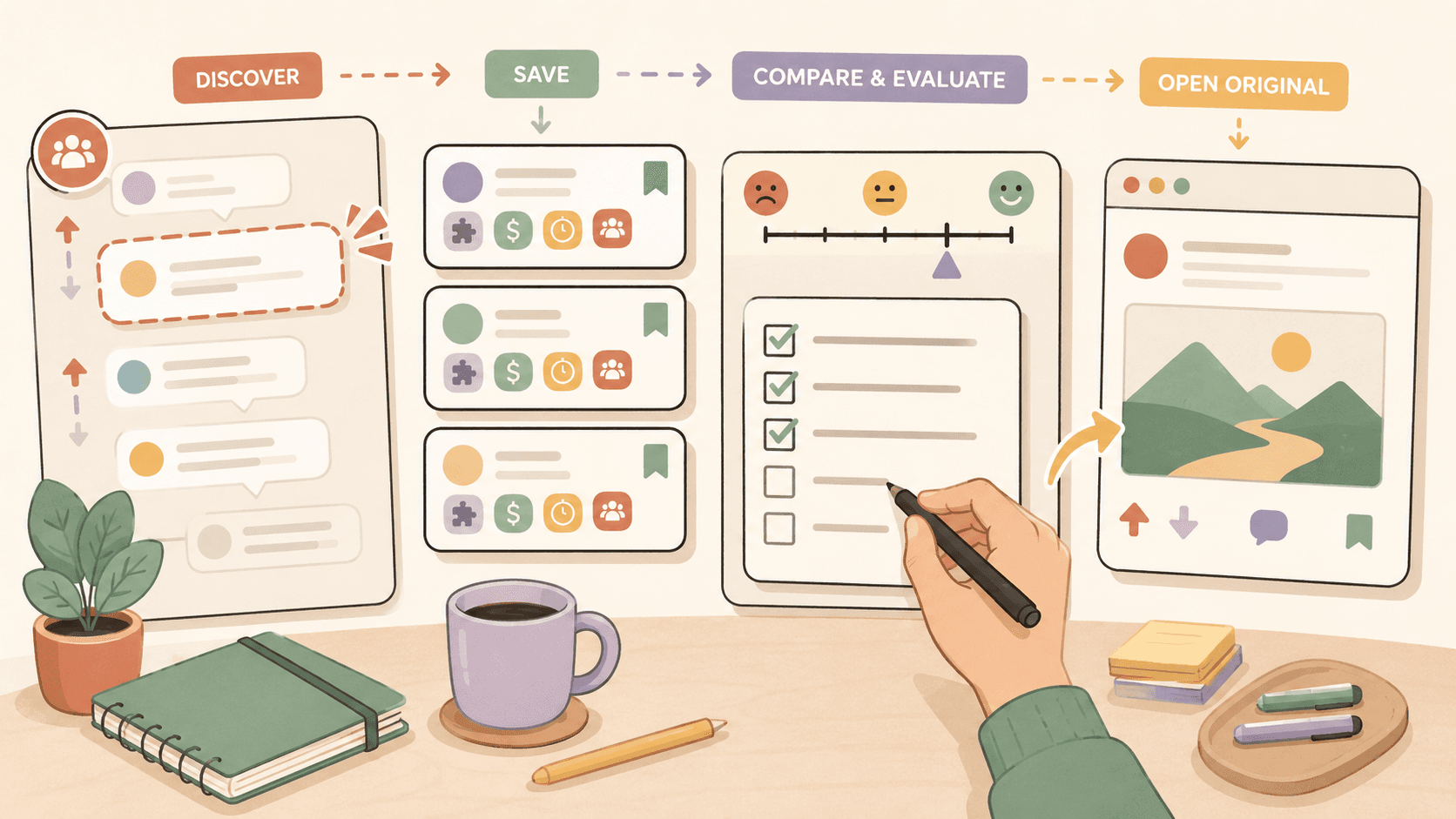
Evaluate freelance leads from public communities by checking post freshness, scope, budget, poster history, payment terms, and whether the rate fits your niche and experience. Prioritize recent posts with clear deliverables, realistic timelines, transparent contact details, and safe payment terms before writing a tailored pitch.
What makes a public freelance lead worth evaluating?
A public freelance lead is worth a closer look when it has at least a few of these signals:
- It was posted recently.
- The work scope is understandable.
- The client describes a real problem, not just a vague idea.
- There is some budget, rate, or pricing context.
- The poster has a believable history or public presence.
- The timeline is possible for the amount of work requested.
- The payment process can be handled safely.
- You can explain why you are a fit in one short, specific reply.
If a post has none of those signals, it may still be real, but it should not get the same attention as a clearer, fresher lead.
Where can you find freelance leads in public communities?
Freelancers commonly monitor public places such as:
- Reddit communities like r/forhire, r/HireaWriter, r/designjobs, r/WorkOnline, and niche subreddits related to their skill.
- X/Twitter searches for phrases like “hiring a freelancer,” “looking for a designer,” or “need a developer.”
- Public Discord and Slack communities where job or gig channels are visible to members.
- Indie hacker, creator, startup, and no-code communities.
- Freelance platforms such as Upwork, Fiverr, Contra, PeoplePerHour, Toptal, and similar marketplaces.
- Portfolio and creator communities where founders, agencies, and creators ask for help.
Each source has different norms. A Reddit post might move fast and require a short direct response. A marketplace lead may require more formal proposal writing. A niche community may reward reputation and helpful public replies before a private pitch.
If you check many of these manually, the search process can become scattered. A discovery dashboard such as Sidequestboard can help you monitor fresh public opportunities in a cleaner feed, save promising leads, and open the original source when you are ready to respond.
See fresh gigs on Sidequestboard
How fresh should a freelance post be before you pitch?
Freshness matters because public freelance leads can attract many replies quickly.
Use this simple timing guide:
| Lead type | Best response window | Why it matters |
|---|---|---|
| Urgent small task | First 1–3 hours | The client may hire the first credible fit. |
| Normal freelance project | First 24 hours | Still fresh enough to be considered. |
| Niche specialist request | First 1–3 days | Fewer qualified people may apply. |
| Ongoing hiring or talent pool post | Up to 1–2 weeks | The client may still be collecting options. |
| Old public post with no recent activity | Usually skip or verify first | It may already be filled. |
Freshness is not the only factor. A three-day-old post for a highly specialized technical writer may still be better than a ten-minute-old generic “design my logo for cheap” post.
What should you check before pitching a freelance lead?
Use this seven-part check before investing time in a pitch.
1. Is the scope clear enough?
Look for signs that the client understands what they need:
- Deliverables: article, landing page, app feature, logo set, audit, video edit, email sequence.
- Quantity: one page, five posts, ten illustrations, three screens, monthly support.
- Constraints: deadline, tools, platform, industry, audience, brand guidelines.
- Success criteria: more leads, cleaner UI, faster site, better documentation, improved conversion.
Be careful with posts that only say:
- “Need someone creative.”
- “Simple job for the right person.”
- “Should only take a few minutes.”
- “Looking for a rockstar.”
- “DM me for details” with no public context.
Vague does not always mean bad, but vague plus low budget plus urgency is usually a poor sign.
2. Is the budget realistic?
A budget does not need to be perfect, but it should be plausible for the work.
Use rate benchmarks as screening ranges, not universal pricing rules. Pricing varies heavily by niche, geography, seniority, project complexity, licensing or usage rights, client type, and how much strategy is involved.
For example:
- A short blog post for a small site is not priced the same as technical content for a B2B software company.
- A logo sketch is not priced the same as a full brand identity system.
- A quick bug fix is not priced the same as owning a production feature.
- A social clip edit is not priced the same as a full campaign with motion graphics and revisions.
When a post lists a budget, ask:
- Does the budget match the number of deliverables?
- Does it include revisions?
- Does it include meetings, research, strategy, or usage rights?
- Is the deadline increasing the cost?
- Is the client asking for senior-level judgment at entry-level pay?
If there is no budget, you can still reply, but your pitch should qualify the lead early: “Depending on scope, projects like this usually start around X. If that fits, I can send a more specific estimate.”
3. Does the poster look real?
Before pitching, inspect the poster’s public history where available.
Good signs:
- Their account has normal activity beyond job posts.
- Their company, product, or project is identifiable.
- They have previously hired or collaborated respectfully.
- Their post history is consistent with the work requested.
- They provide a legitimate website, portfolio, company page, or public profile.
Warning signs:
- New account with no context and a high-value offer.
- Repeated posts for the same role without explanation.
- Complaints from other users about nonpayment or spam.
- Inconsistent identity across links.
- Pressure to move immediately to a private channel with no details.
You do not need to investigate every lead for an hour. A two-minute trust check can prevent many bad pitches.
4. Are the payment terms safe?
Public communities vary widely in payment protection. Some posts are simply introductions, not protected transactions.
Look for safe payment practices such as:
- Milestones for larger projects.
- Deposit before work begins.
- Written scope and approval process.
- Clear payment method.
- Contract or statement of work for larger engagements.
- Platform escrow where relevant.
Be cautious if someone asks for:
- Free custom work before any agreement.
- Unpaid “test” projects that resemble real client work.
- Payment only after unlimited revisions.
- Access to your accounts, wallet, banking details, or identity documents without a legitimate process.
- Off-platform payment arrangements that violate the marketplace’s terms.
Marketplace fees and payment rules change over time. Before pricing a project on Upwork, Fiverr, Contra, PeoplePerHour, Toptal, or any similar platform, verify current service fees, payment protection, withdrawal rules, and terms directly from the platform’s official pages.
5. Is the timeline reasonable?
A short deadline is not automatically bad. Some clients pay well for urgency. The problem is when urgency combines with unclear scope and low pay.
Ask:
- Can the work be done well in the requested time?
- Does the client have assets ready?
- Are approvals included in the deadline?
- Is there time for feedback and revisions?
- Would accepting this project disrupt better work already on your calendar?
A rushed lead can be worth pitching if you can define a smaller first milestone: “I can deliver the audit by Friday, then we can decide whether to continue with implementation next week.”
6. Is there a clear reason you are a fit?
Before you pitch, complete this sentence:
“I should reply because I have done something similar involving ____.”
That blank might be:
- The industry.
- The platform.
- The audience.
- The deliverable type.
- The technical stack.
- The business problem.
- The style or format.
If you cannot name a fit signal, the lead may still be possible, but your pitch will be weaker.
7. Can you respond with a specific next step?
A good lead should allow a concrete reply. For example:
- “I can review the landing page and send three conversion fixes.”
- “I can write one test article outline before we commit to the full batch.”
- “I can rebuild the form flow and deploy it by Thursday if the assets are ready.”
- “I can edit one sample clip in your style and quote the monthly package after that.”
If your only possible response is “I’m interested,” you may not have enough information yet.
A simple scoring rubric for freelance leads
Score each public lead from 0 to 2 in each category.
| Category | 0 points | 1 point | 2 points |
|---|---|---|---|
| Freshness | Old or likely filled | Somewhat recent | Very recent |
| Scope | Vague | Partly clear | Clear deliverables |
| Budget | Missing or unrealistic | Unclear but possible | Realistic or negotiable |
| Poster trust | Suspicious or no context | Limited context | Credible history or identity |
| Payment safety | Risky | Needs clarification | Clear safe process |
| Fit | Weak fit | Possible fit | Strong relevant fit |
| Response path | No clear next step | Needs questions | Easy to pitch specifically |
Suggested interpretation:
- 12–14 points: Prioritize. Pitch quickly and specifically.
- 9–11 points: Worth a reply if the project fits your goals.
- 6–8 points: Ask qualifying questions or save for later.
- 0–5 points: Usually skip.
This system prevents you from overthinking every post while still avoiding random pitching.
What red flags should make you skip a lead?
Skip or heavily qualify posts with these signals:
- “Exposure” instead of pay.
- Unrealistic budget for a large scope.
- “This is easy” used to justify low pay.
- No details until you join a private group or download a file.
- Requests for free custom samples that could be used immediately.
- Payment after full delivery with no contract, deposit, milestone, or escrow.
- Suspicious links, attachments, or requests for sensitive information.
- Aggressive urgency: “Need this now, no questions.”
- Unclear ownership of the project or company.
- Bad reputation in community comments.
One red flag may be explainable. Several together usually mean you should move on.
How should beginners evaluate leads differently?
Beginners often need portfolio pieces and testimonials, but that does not mean accepting every low-quality lead.
If you are new, prioritize leads that offer at least one of these:
- A small paid project with clear deliverables.
- A client in a niche you want to pursue.
- Work you can show publicly with permission.
- A chance to build a repeatable service.
- A respectful client who communicates clearly.
Avoid projects that are large, vague, unpaid, and urgent. Those are difficult even for experienced freelancers.
A beginner-friendly lead might be:
“Looking for a designer to create three simple social post templates for a local fitness studio. Budget is modest, examples provided, need editable Canva files.”
A risky beginner lead might be:
“Need complete brand, website, ads, and social strategy. Low budget now but huge potential later.”
The first has a bounded scope. The second can easily become unpaid consulting.
How do you evaluate leads from Reddit?
Reddit can produce good freelance leads, but it requires fast filtering.
Check:
- Subreddit rules: Some communities require budget, location, flair, or specific title formats.
- Post age: Many good posts get replies quickly.
- Comment quality: Are other freelancers asking normal questions or warning about the poster?
- User history: Does the account look consistent and human?
- Budget clarity: Some subreddits require it, but you still need to judge whether it is realistic.
- Contact method: If the post asks for DM, keep your first message short and relevant.
Useful Reddit search patterns include:
site:reddit.com/r/forhire "[hiring]" "designer"site:reddit.com "looking for a freelance writer"site:reddit.com "hiring" "Next.js developer"site:reddit.com "need a video editor" "paid"
Replace the skill terms with your niche.
How do you evaluate leads from X/Twitter and social platforms?
Social posts are often short, so you need to infer carefully.
Look for:
- A real person or company behind the post.
- Replies from credible people.
- A clear pain point.
- A link to a product, job post, or project page.
- Recent activity showing the request is still live.
Search phrases that may reveal leads:
- “looking for a freelance [skill]”
- “need a [skill] for a project”
- “hiring a contract [role]”
- “anyone know a good [skill]”
- “paid opportunity [skill]”
For social leads, speed helps, but relevance matters more. A short reply that references the exact problem will stand out more than a generic “DM sent.”
How do you evaluate leads from freelance marketplaces?
Freelance marketplaces can offer more structure, but they still need evaluation.
Before sending a proposal, review:
- Client history, ratings, or verified payment indicators where available.
- Total scope and deliverables.
- Number of competing proposals if visible.
- Whether the budget is fixed, hourly, or unclear.
- Platform rules about communication, payment, fees, and disputes.
- Whether the project matches your positioning.
Do not assume every marketplace lead is safe or profitable. Read the current platform terms and use the platform’s official payment protections where appropriate.
What should your first pitch include?
A good first pitch from a public lead is short, specific, and easy to answer.
Use this structure:
- Mention the exact project.
- State your relevant experience.
- Give one useful observation or approach.
- Suggest a simple next step.
- Include proof if helpful.
Example:
Hi — I saw your post about needing a landing page rewrite for your SaaS onboarding flow. I’ve worked on similar conversion-focused pages for B2B tools. One thing I’d look at first is whether the hero section explains the user outcome clearly before listing features. If useful, I can send a short outline of the page structure I’d recommend. Here are two relevant examples: [links].
For a technical project:
Hey — I saw you need help fixing a slow checkout flow. I’ve worked with similar React and Stripe issues. I’d first check whether the delay is coming from client-side state, API calls, or third-party scripts. If you can share the repo context and the specific error or performance target, I can estimate the first milestone.
For a writing project:
Hi — your post about needing technical blog content for developers caught my eye. I’ve written explainers and tutorials for similar audiences. I’d suggest starting with one outline so you can check depth and tone before committing to a batch. Happy to send two relevant samples.
The pitch should make the client think, “This person actually read the post.”
What questions should you ask before accepting?
Before saying yes, ask enough to protect your time.
Useful questions:
- What is the exact deliverable?
- What is the deadline?
- Who approves the work?
- How many revision rounds are included?
- Are assets, access, examples, or brand guidelines ready?
- What is the budget or expected range?
- How will payment be handled?
- Can this work be shown in a portfolio?
- What would make the project successful?
For small projects, you may only need a few of these. For larger projects, get the answers in writing.
How should you track freelance leads after you find them?
If you monitor public communities every day, tracking becomes important. Otherwise you may forget where you found a lead, pitch too late, or follow up inconsistently.
A simple tracking table can include:
- Source link.
- Date found.
- Post age.
- Client or poster name.
- Skill category.
- Budget or rate notes.
- Lead score.
- Pitch status.
- Follow-up date.
- Outcome.
You can manage this in Google Sheets, Airtable, Notion, Trello, or your preferred system. The key is to separate searching from pitching: collect and score leads first, then respond to the best ones with focused attention.
A 20-minute daily workflow for public freelance leads
Try this routine:
- 5 minutes: Scan fresh posts from your best communities and searches.
- 5 minutes: Save only leads that pass your basic red-flag check.
- 5 minutes: Score the top leads using the rubric above.
- 5 minutes: Pitch one or two high-fit leads with tailored replies.
This is where Sidequestboard can fit naturally: use it to reduce tab switching, spot fresh public opportunities, save the ones worth evaluating, then open the original listing or source to apply or respond directly.
How do you decide whether to pitch, save, or skip?
Use this quick decision tree:
- Pitch now if the lead is fresh, relevant, realistic, and safe enough.
- Save and review later if it is promising but missing budget, timing, or scope details.
- Ask a qualifying question if one answer would determine whether it is worth your time.
- Skip if it is stale, vague, underpaid, risky, or outside your positioning.
The best freelancers are not only better at pitching. They are better at choosing what deserves a pitch.
Final checklist before you reply
Before sending your pitch, confirm:
- The post is still fresh enough.
- The work scope is understandable.
- The budget is realistic or worth qualifying.
- The poster looks credible enough.
- The payment path can be made safe.
- The timeline is possible.
- You have a clear reason you fit.
- Your reply includes a specific next step.
If a lead passes those checks, respond quickly. If it does not, save your energy for a better opportunity.