August 27, 2026
How to Find Beta Testing Jobs for Beginners: Platforms, Applications, and Tips
Beginners can find beta testing work through dedicated platforms such as UserTesting, uTest, Testlio, Userlytics, PlaytestCloud, and BetaTesting, plus public communities where founders request product feedback. Create complete tester profiles, check device and location requirements, pass screeners honestly, and verify payment terms. Track direct opportunities so you can respond before they go stale.
Where can beginners find beta testing jobs?
Start with dedicated testing platforms, then add public communities and direct outreach as secondary channels. Platform availability, screening rules, devices, locations, test volume, and compensation can change, so review each company’s official contributor information before signing up.
1. UserTesting
UserTesting connects companies with people who review websites, apps, prototypes, and other user experiences. Depending on the available study, you may be asked to complete a screener, record your experience, speak your thoughts aloud, or answer follow-up questions.
For a beginner, the useful first steps are:
- Create a complete contributor profile.
- Use the practice or sample process if one is offered.
- State your devices, operating systems, language, and relevant experience accurately.
- Read every screener before accepting a study.
- Confirm the task, recording requirements, deadline, and payment information shown by the platform.
Do not assume that completing a profile guarantees an invitation. Test availability depends on the studies currently seeking participants and whether your profile matches their requirements.
2. uTest
uTest is a testing community associated with software testing projects. Opportunities may involve reporting bugs, testing specific devices or environments, reproducing issues, or completing project-based tasks.
Beginners should learn the difference between a useful bug report and a general complaint. A strong report normally includes:
- a short, specific title;
- the device, browser, or operating system used;
- clear steps to reproduce the issue;
- the expected result;
- the actual result;
- screenshots, screen recordings, or other evidence when permitted; and
- information about whether the issue can be reproduced consistently.
Read the project rules carefully. A report can be rejected when it duplicates an existing report, falls outside the requested scope, or lacks enough evidence.
3. Testlio
Testlio operates a network for software testing and quality-related projects. Its opportunities may have particular requirements for location, language, device ownership, technical ability, or test availability.
If you apply, keep your profile current and answer qualification questions precisely. Do not claim to own a device or have testing experience that you do not have. Before starting a project, check the test instructions, reporting process, deadlines, and current compensation terms on the official platform.
4. Userlytics
Userlytics offers usability and user-research studies for websites, apps, and other digital products. A study may require a moderated session, an unmoderated task, written feedback, or a recorded review.
Pay attention to consent and privacy instructions. Some studies may involve screen, audio, or video recording. Only accept a test when you understand what will be recorded, how the session will be completed, and how the platform describes payment.
5. PlaytestCloud
PlaytestCloud focuses on testing games and game experiences. A test may ask you to play a build, describe your reactions, answer questions, or provide feedback about onboarding and gameplay.
Game testing is not only about finding technical bugs. Useful feedback can cover:
- whether the first-time experience is understandable;
- where the tutorial becomes confusing;
- whether controls respond as expected;
- which parts feel enjoyable or frustrating; and
- what stopped you from continuing.
Check the official tester information for supported devices, locations, age requirements, study instructions, and current reward rules.
6. BetaTesting
BetaTesting is another source of product feedback and beta participation opportunities. Studies can vary by product type, audience, device, and testing goal.
Complete your profile carefully and treat each invitation as a separate assignment. Read the eligibility questions and instructions instead of giving the answer you think the requester wants. Honest feedback is more useful than positive feedback that does not explain the actual experience.
Can beginners find beta testing work outside testing platforms?
Yes. Independent product-feedback projects may appear in public communities and professional networks, especially when a founder needs early users for an app, website, prototype, or game. These leads are less standardized than platform-based studies, so verification matters more.
Useful places to monitor include:
- Reddit, including relevant job, startup, freelance, product, and testing communities;
- LinkedIn, where founders, agencies, and user-research professionals may post project requests;
- Discord communities for developers, indie game teams, no-code builders, and product creators;
- Slack communities focused on startups, design, research, or software testing; and
- freelance marketplaces or public project boards where usability reviews and QA tasks are listed.
Search phrases such as these can uncover adjacent opportunities:
- “beta tester needed”
- “website usability test”
- “app feedback needed”
- “user research participants”
- “test our prototype”
- “mobile app QA tester”
- “game playtest”
- “early access feedback”
- “bug reproduction”
- “product feedback freelance”
A direct community post is not automatically a legitimate job. Check the poster’s history, the product or company identity, the work scope, the information requested from you, and the payment terms. Never pay to access a supposed job, and avoid sharing sensitive identity or financial information before you understand who is hiring and why it is needed.
Find current openings on Sidequestboard
What is the difference between beta testing, usability testing, and bug testing?
These terms overlap, but they usually describe different goals:
- Beta testing evaluates a product with real or target users before a wider release. Feedback may cover overall experience, missing features, confusing flows, and technical problems.
- Usability testing focuses on whether people can complete specific tasks and understand the interface.
- Bug testing focuses on finding, reproducing, and documenting defects.
- User research may explore preferences, behaviors, needs, or reactions through interviews, surveys, or product tasks.
- Quality assurance testing often follows a more structured process involving test cases, environments, regression checks, and issue tracking.
Read the assignment rather than relying on the label. A “beta test” may be a short opinion study, while a QA project may require detailed reports and repeated test cycles.
How should a beginner apply for a beta testing opportunity?
Use a short, evidence-based application. Explain why you fit the test and what you can deliver.
A useful application can include:
- your relevant device, operating system, browser, or console;
- your location and language, when relevant;
- experience testing apps, websites, or games;
- examples of the feedback format you use;
- your availability during the requested testing window; and
- a direct confirmation that you read the scope.
For a direct client post, you could write:
Hi, I can test this on [device and operating system] during [time window]. I can review the requested flow, record usability issues, and provide reproducible bug steps with screenshots where appropriate. Please share the target tasks, testing environment, deadline, recording requirements, and payment terms.
Do not send a long generic pitch. A concise reply that answers the post is easier for a project owner to evaluate.
What should a beta testing report include?
The format depends on the assignment, but a beginner can use this structure:
Test details
- Product or build tested
- Date and time
- Device and operating system
- Browser or app version
- Connection or environment details when relevant
Task results
- Task attempted
- Whether the task was completed
- Where the experience became unclear
- Time-consuming or repetitive steps
Issues and observations
- Issue title
- Severity or user impact
- Steps to reproduce
- Expected result
- Actual result
- Evidence
- Suggested improvement, if requested
Overall summary
- What worked well
- Biggest obstacle
- Who may struggle with the product
- One or two practical recommendations
Separate confirmed defects from personal preferences. “The button does not respond after three taps” is different from “I prefer a different button color.” Both observations can be useful, but they should not be presented as the same kind of finding.
How much do beta testing jobs pay?
There is no single beginner rate. Compensation depends on the platform, study length, test type, location, screening requirements, technical complexity, and whether the work is a platform study or a direct client project.
Common models include:
- a platform-defined incentive for completing a study;
- payment for a moderated usability session;
- a reward for an approved bug report;
- a fixed amount for a defined product review; or
- an independently negotiated fee for a usability audit or QA assignment.
Some early-access or community beta tests may be unpaid. They can still provide product experience, but do not treat exposure, access, or a promise of future work as guaranteed compensation.
For independent work, price the scope rather than promising unlimited testing. Define the number of flows, devices, testing rounds, deliverables, deadline, and revision expectations. Ask the client to confirm the fee, payment method, approval process, and any expenses before you begin. Verify current platform-specific compensation directly with the platform because terms can change.
How can beginners avoid beta testing scams?
Use this checklist before accepting an opportunity:
- Find the original listing and identify the person or company behind it.
- Check whether the requested work has a clear product, scope, deadline, and deliverable.
- Confirm how and when payment is handled.
- Be cautious if you are asked to pay a registration, equipment, or release fee.
- Do not install unknown software outside a clearly explained testing process.
- Avoid sharing passwords, authentication codes, or unnecessary identity documents.
- Read recording, data-use, confidentiality, and intellectual-property terms.
- Keep copies of instructions and your submitted report.
When a post is vague about the work but urgent about obtaining personal information or money, move on.
How can you organize beta testing applications?
Create a simple tracker in Notion, Trello, Google Sheets, or another tool you already use. Useful fields include:
- platform or source;
- product and test type;
- original listing URL;
- date found;
- eligibility requirements;
- device or software needed;
- application status;
- deadline;
- expected compensation;
- privacy or confidentiality requirements; and
- follow-up date.
Review the original source before applying because public posts can change, close, or be removed. A tracker also helps you avoid applying twice and shows which types of tests match your profile.
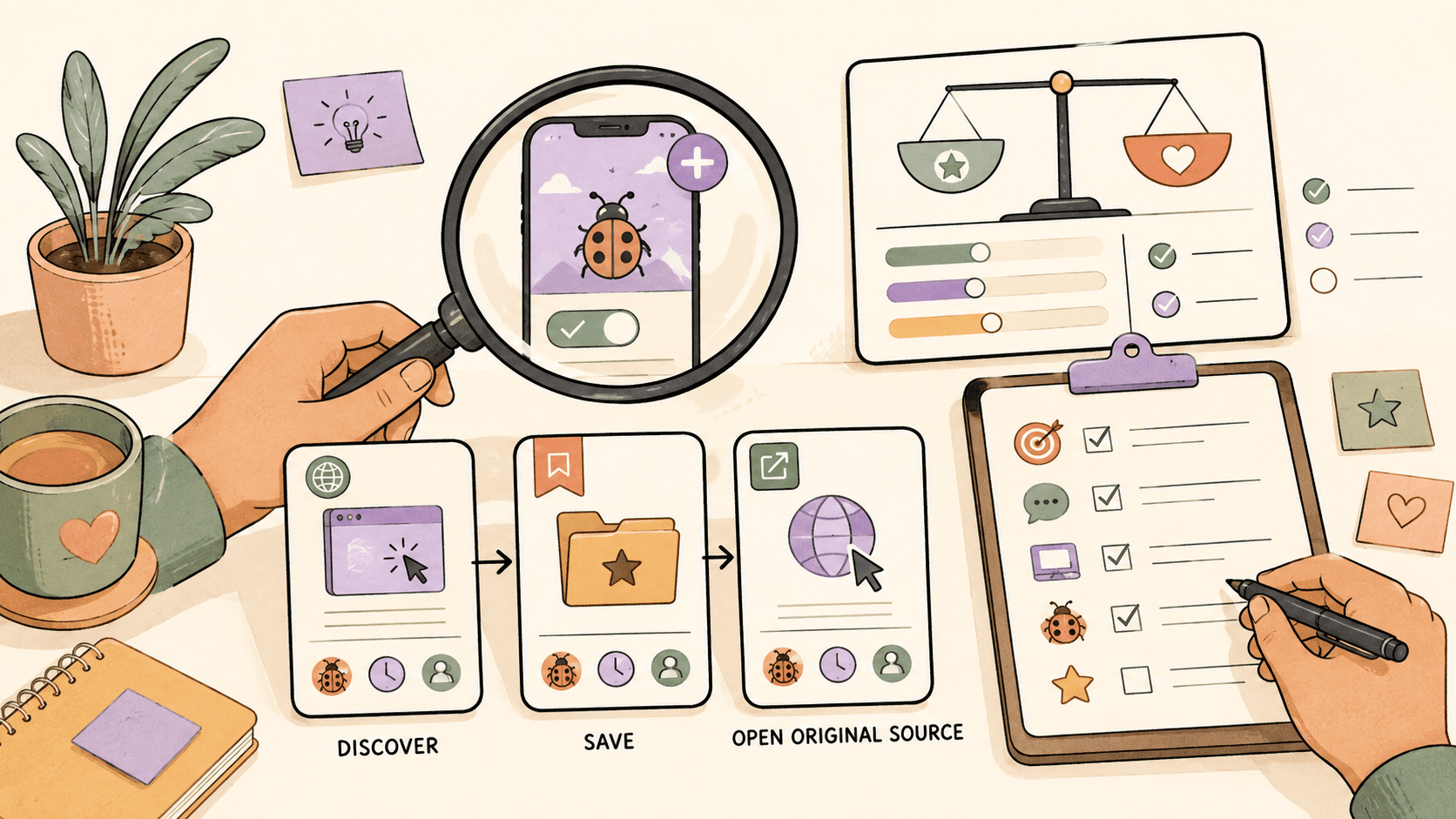
For people monitoring several Reddit communities, LinkedIn posts, Discord groups, or freelance boards, Sidequestboard can provide a calmer place to discover fresh public opportunity posts, save relevant leads, and open the original source before responding. It is a discovery and organization aid, not a beta-testing platform or a guarantee that a listing is legitimate.
A simple weekly plan for finding beginner testing work
Monday: Update your profiles
Check your device list, operating systems, languages, availability, and testing examples on the dedicated platforms you use.
Tuesday: Search direct opportunities
Review relevant Reddit, LinkedIn, Discord, and Slack communities using several versions of the search terms above.
Wednesday: Improve your evidence
Write a sample usability report for an app or website you already use. Focus on reproducible observations and clear task results.
Thursday: Apply selectively
Respond to opportunities that match your devices, location, skills, and availability. Personalize each application to the stated requirements.
Friday: Follow up and review
Update your tracker, close stale leads, record which applications produced responses, and refine your profile based on the work you completed.
Consistency is more useful than sending dozens of generic applications. Keep checking official platform pages and original listings for current requirements.
Frequently asked questions
Is beta testing a good job for beginners?
It can be a practical way to learn structured feedback, usability observation, and bug reporting. Available work and compensation vary, and many opportunities require screening or specific devices, so it should not be treated as guaranteed income.
Do I need technical experience to become a beta tester?
Not always. Usability studies may value clear task feedback from ordinary users, while QA and bug-testing projects may require more technical skills. Read each opportunity’s requirements and describe your actual experience accurately.
Which beta testing platform should a beginner try first?
Compare UserTesting, uTest, Testlio, Userlytics, PlaytestCloud, and BetaTesting based on the tests relevant to your devices, location, interests, and skills. Confirm current eligibility, availability, and payment details on each official platform before relying on it.
Can I find beta testing jobs on Reddit or LinkedIn?
Yes, founders, agencies, researchers, and product teams may post feedback or testing requests there. These posts require more independent verification than a structured platform, so inspect the source, scope, privacy terms, and payment arrangement before starting.
How do I prove that I can provide useful feedback?
Show a short sample report with the device and task, observed problem, reproduction steps, user impact, and evidence. Clear examples are more persuasive than simply saying that you are detail-oriented.
Should I accept an unpaid beta test?
Only if the scope is clear and the nonfinancial value is worthwhile to you, such as product experience or portfolio evidence. Do not assume unpaid access will lead to paid work, and never pay someone to receive a supposed testing assignment.