August 30, 2026
How to Find Fresh Paid Design Projects: A Practical Daily Workflow
Find fresh paid design projects by checking focused sources such as Reddit’s r/designjobs and r/forhire, Dribbble Jobs, Behance Joblist, LinkedIn, and relevant professional communities. Filter each listing for scope, budget, timing, and client credibility, then send a tailored reply quickly. Save promising opportunities and follow up once after 48–72 hours.
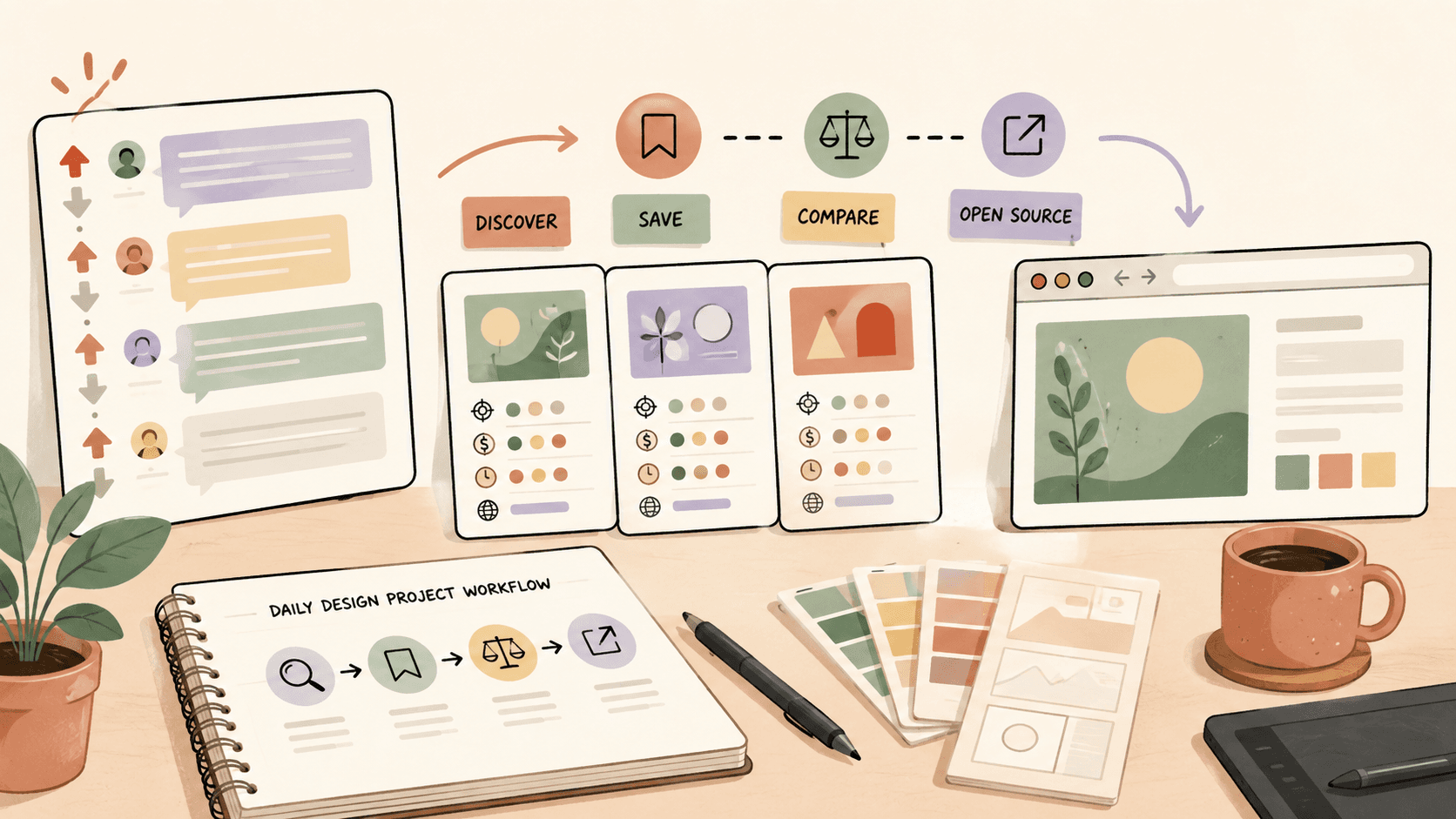
What is the fastest way to find fresh paid design projects?
Use a short, repeatable search routine rather than browsing every possible marketplace. Check a few relevant public sources, sort for recent posts where possible, screen each opportunity against the same criteria, and respond with a concise pitch that addresses the actual brief.
Useful sources may include:
- Reddit, especially communities such as r/designjobs, r/forhire, and r/Design
- Dribbble Jobs
- Behance Joblist
- 99designs
- LinkedIn searches for contract, freelance, and project-based design work
- Professional Discord, Slack, and local creative communities that publish opportunities publicly
Availability, posting rules, and platform terms can change, so verify the current details on each source before applying.
A practical daily routine is:
- Search your highest-signal sources for 15–20 minutes.
- Open only listings that match your skills and availability.
- Score each listing for freshness, clarity, fit, and credibility.
- Send a tailored response to the strongest opportunities.
- Save the listings that need a later follow-up.
A focused routine is usually more useful than collecting dozens of links without applying to any of them.
How can you tell whether a design project is still fresh?
A recent timestamp helps, but it is not enough by itself. A listing may be newly posted but already have many replies, while an older post may still be active if the client is reviewing candidates slowly.
Check these signals:
- Posting date: Is the opportunity recent enough for the expected start date?
- Active language: Does the client say they are still looking, or provide a current deadline?
- Specificity: Are the deliverables, timeline, and decision process reasonably clear?
- Response evidence: Has the client replied to comments, updated the post, or indicated that interviews are underway?
- Fit: Does the brief match your actual portfolio and availability?
You can use a simple four-point freshness score:
| Signal | 1 point when... |
|---|---|
| Recency | The post is recent or has a clearly current deadline |
| Activity | The client appears to be checking or updating the listing |
| Clarity | The work, deliverables, and timeline are understandable |
| Fit | Your skills and availability match the request |
Listings scoring three or four points deserve prompt attention. A score of one or two is a reason to investigate further before spending time on a proposal.
Browse today’s opportunities on Sidequestboard
Which design project listings should you skip?
Skip or pause on opportunities that show several warning signs, including:
- No usable description of the work
- Pressure to begin unpaid production work before a serious conversation
- Requests for passwords, unnecessary identity documents, or financial information
- Payment promises that are vague, unusually urgent, or disconnected from the scope
- A client who will not clarify deliverables, revisions, ownership, or timing
- Requests to move immediately to an unfamiliar payment or communication service
- A portfolio request that appears to be designed to collect free concepts from many applicants
Do not assume that every informal post is fraudulent. Instead, ask a short clarifying question and verify the client or organization through an independent official source when appropriate. Never send sensitive information merely because a listing appears time-sensitive.
How should you search across several design platforms without wasting time?
Create a small source list based on the type of work you want. For example, a product designer might monitor Dribbble Jobs, Behance Joblist, LinkedIn, and relevant Reddit communities. An illustrator might add illustration-focused communities and client networks. A brand designer may find better results through agency, startup, and local-business groups.
Use consistent searches such as:
- “freelance product designer”
- “contract UI designer”
- “brand identity project”
- “illustration commission”
- “web designer needed”
Keep a record of which searches produce real opportunities. Remove sources that repeatedly generate vague, outdated, or irrelevant posts.
If checking many communities is taking longer than responding to opportunities, consolidate the discovery step. Sidequestboard can provide a calmer place to monitor public opportunities, save promising listings, and open the original source when you are ready to respond. It is a discovery and organization layer, not a marketplace, recruiting service, or guarantee of work.
What should a designer include in a first response?
A strong first response is brief, specific, and easy to evaluate. It should show that you understood the brief without repeating the entire post.
Include:
- The type of work you would handle
- One or two relevant portfolio links
- A short observation about the client’s stated need
- Your availability or earliest realistic start date
- One useful question about scope, timeline, or process
A practical template is:
Hi [name] — I saw that you need help with [specific deliverable]. I’ve worked on similar [project type] work, including [brief relevant example]. You can see it here: [portfolio link]. I’m available [availability]. Before I suggest a firm estimate, could you confirm [scope or timeline question]? Thanks, [name]
Avoid sending the same generic paragraph to every client. A tailored opening line can make it clear that you read the listing and understand the problem.
How should you price a small design project?
Start with the scope rather than choosing a number from a generic online rate list. Clarify the deliverables, number of concepts, revision rounds, meetings, file formats, usage or ownership expectations, and deadline.
You can then choose an hourly, daily, or project-based structure. For a project estimate, a simple model is:
Estimated price = expected work time × your target rate + complexity or rush adjustment
For example, if a project requires several working sessions plus communication and revisions, include all of that time rather than pricing only the time spent producing the final files. Treat any example calculation as a planning illustration, not as a current market benchmark.
Rates vary by specialty, experience, geography, client type, and scope. If you use a platform such as 99designs or another freelance marketplace, review that platform’s official pricing or help page for its current fees and payment terms before accepting work. Do not rely on old percentage figures from blog posts.
How can you track fresh project opportunities?
Use a simple tracker with fields such as:
- Source and original listing URL
- Date discovered
- Date last checked
- Project type and required skills
- Stated budget or “not provided”
- Client or organization name
- Freshness score
- Application status
- Follow-up date
- Notes about scope, risks, and next steps
Set a clear follow-up rule. If the listing still appears active, follow up once after 48–72 hours with a short message. If there is no response, the post disappears, or the client says the role is filled, close the opportunity and move on. This keeps your tracker useful instead of turning it into an archive of unanswered applications.
Ready to stop checking four tabs every morning? Create a Sidequestboard feed, save listings that match your filters, and open the original post when you are ready to apply.
Worked example: a UI designer looking for a fresh project
A UI designer searches for contract product design work across Dribbble Jobs, LinkedIn, r/forhire, and a startup-focused professional community. They find a recent post from a company requesting help improving onboarding screens.
Before replying, they check:
- Whether the post gives a current delivery window
- Whether the client explains the existing product and expected deliverables
- Whether the requested work matches their onboarding case study
- Whether the client has provided a verifiable company identity or portfolio of previous work
The designer saves the original URL, records the listing’s freshness score, and replies with one relevant case study and a question about the current research and revision process. If the post remains active, they schedule one follow-up for 48–72 hours later.
Worked example: an illustrator evaluating a commission
An illustrator finds a public commission request through Reddit and a creative community. The client describes the subject, intended use, number of illustrations, and desired deadline but does not state a budget.
Instead of guessing, the illustrator asks about usage, deliverable formats, revision expectations, and budget range. They share a relevant portfolio link and avoid producing unpaid sample artwork before the scope and payment terms are clear.
If the client provides reasonable answers, the illustrator can prepare an estimate. If the client refuses to clarify basic terms or requests extensive free work, the opportunity is marked as a skip.
A 20-minute daily workflow
Use this schedule when you want a sustainable search habit:
- Minutes 1–5: Check the sources that have produced the best-fit opportunities recently.
- Minutes 6–10: Review new posts and remove listings that fail your basic safety or scope checks.
- Minutes 11–16: Respond to the strongest one or two opportunities with tailored messages.
- Minutes 17–20: Save promising listings, update statuses, and schedule any 48–72-hour follow-ups.
The objective is not to apply everywhere. It is to identify credible, relevant opportunities while they are still actionable and then respond with enough specificity to start a useful conversation.
Final checklist before you apply
- Is the listing recent or clearly still active?
- Do you understand the deliverables and deadline?
- Does the project match your skills and portfolio?
- Have you checked for safety and credibility concerns?
- Did you include a relevant work sample?
- Did you avoid promising an estimate before clarifying major scope questions?
- Did you save the original URL and record a follow-up date?
A consistent process makes fresh project discovery less chaotic. Keep your source list focused, screen opportunities before investing time, and use a tracker so good leads do not disappear in a browser history full of open tabs.
Sources
- Contra — Pricing — Official platform fee information; verify current terms before relying on pricing.