August 1, 2026
Freelance Work for Beginners: Get Brand, Video, and Film Clients
To get freelance work as a beginner in brand, video, or film, choose one specific service, create 2 to 3 relevant proof samples, find fresh leads, and send short pitches that match the buyer’s exact need. The best workflow combines public community posts, social search, agencies, referrals, marketplaces, and a simple lead tracker.
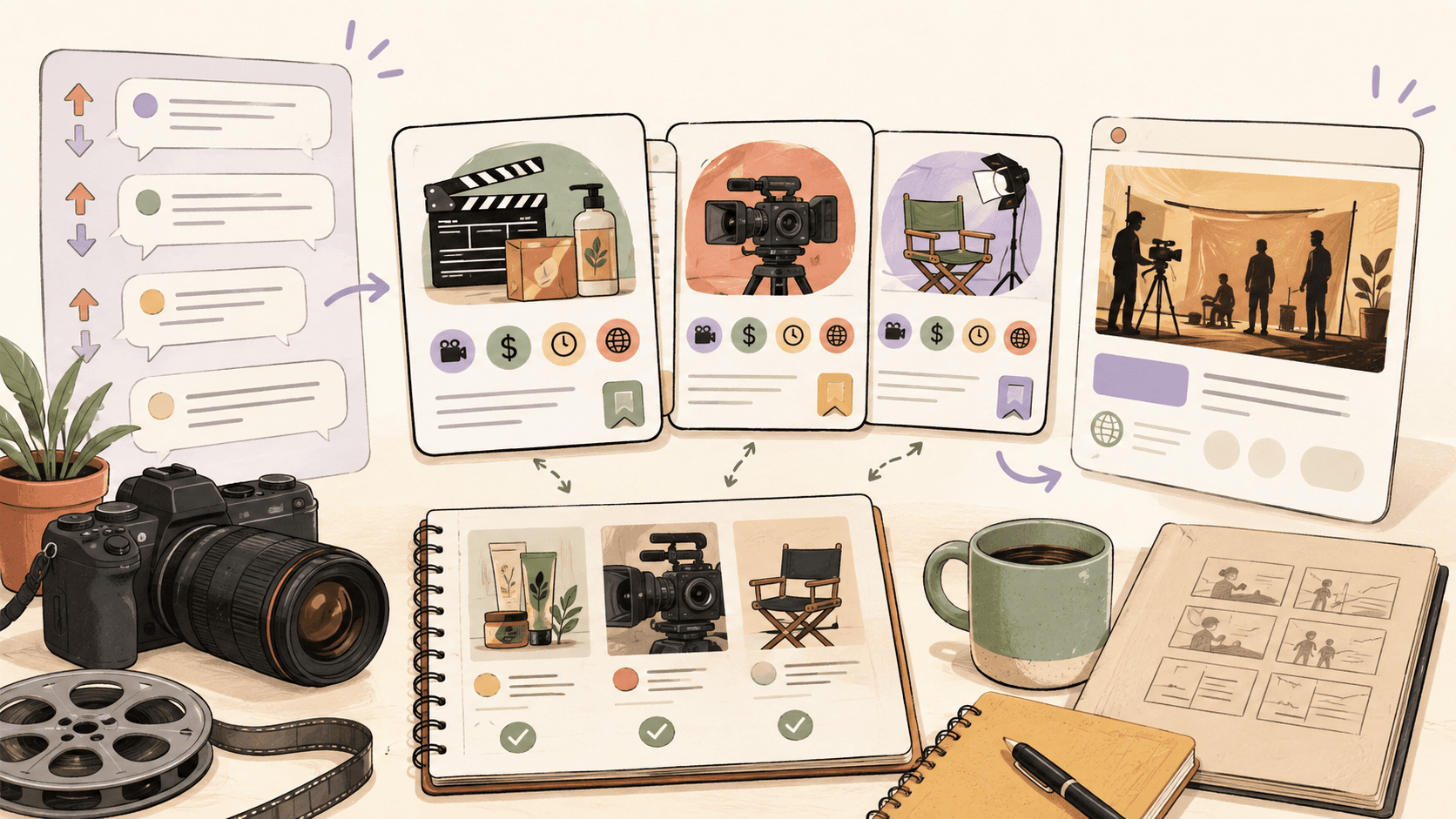
Why is getting freelance clients harder now?
Getting freelance clients is not only about talent. Many strong creative freelancers struggle because their client-finding process is scattered, slow, or too generic.
Common problems include:
- checking too many tabs across Reddit, X/Twitter, LinkedIn, Discord, job boards, and marketplaces;
- finding good posts after dozens of people have already replied;
- pitching with a broad portfolio instead of one relevant sample;
- quoting before understanding the scope;
- relying on one platform that can change fees, ranking rules, or visibility;
- not tracking leads after the first message;
- presenting too many services before proving one clear result.
For brand, video, and film work, timing and trust both matter. A founder looking for a launch video, a creator hiring an editor, or a company needing a brand refresh may choose from the first few useful replies they receive. Your workflow should help you find relevant opportunities early and respond clearly.
How can beginners get their first brand, video, or film freelance client?
Beginners should not wait for a perfect portfolio before pitching. You need enough proof to show judgment, taste, and execution for one specific service.
If you have no paid clients yet, start with this:
- Choose one role-specific offer. Do not sell branding, video, copy, websites, and strategy all at once. Pick one clear starting point, such as short-form video editing for creators or landing page copy for SaaS startups.
- Create 2 to 3 proof samples. These can be spec samples, personal projects, school projects, or volunteer work if labeled honestly.
- Use material ethically. Only repurpose existing footage, logos, screenshots, or client assets if you have permission or if the material is clearly allowed for practice use. Do not imply a brand hired you if it did not.
- Build a one-page portfolio. Use Notion, Framer, Webflow, Carrd, Google Drive, Vimeo, Behance, Contra, or a simple personal site. Make it easy to see your role, deliverables, and contact details.
- Send targeted outreach. Reply to specific opportunities instead of applying everywhere.
Beginner proof sample ideas:
- one product video edit using permitted footage;
- one short-form content batch with captions, pacing, and hooks;
- one YouTube editing sample showing intro, pacing, B-roll, and retention choices;
- one brand positioning audit for a real or mock business;
- one landing page rewrite with before-and-after copy;
- one event highlight reel from footage you are allowed to use;
- one Webflow or Framer landing page concept for a clear business type.
A beginner does not need to look like a full-service agency. It is often more convincing to say, “I edit short-form product videos for founder-led brands,” than, “I can help with all marketing and content.”
Find current openings on Sidequestboard
What freelance offer should you lead with?
A strong offer tells the buyer exactly what you do, who it is for, and why it matters.
Weak offers sound like this:
- “I do video.”
- “I can help with branding.”
- “I’m a creative freelancer.”
- “I make content.”
Better offers sound like this:
- “I edit weekly YouTube videos for B2B founders.”
- “I create short-form product videos for DTC brands.”
- “I build launch pages in Webflow for early-stage SaaS teams.”
- “I write landing page copy for paid traffic campaigns.”
- “I produce event highlight films for local brands and conferences.”
- “I create brand audits for startups preparing a launch or rebrand.”
Use this simple offer framework:
- Who you help: creators, founders, agencies, studios, SaaS teams, ecommerce brands, local businesses.
- What you deliver: edit, launch film, brand audit, landing page, copy package, reel, website, pitch deck, content batch.
- Why it matters: clearer positioning, better trust, faster launch, more consistent content, stronger ad creative, better audience retention.
- When you can start: this week, next week, after a quick scope call, or for a specific production date.
Role-specific examples:
- Video editor: “I edit talking-head YouTube videos into polished weekly episodes with captions, B-roll, and pacing improvements.”
- Filmmaker: “I shoot and edit product launch films for founder-led companies.”
- Producer: “I help small teams plan shoots, source crew, manage production days, and deliver social cutdowns.”
- Brand strategist: “I help early-stage startups clarify positioning before a launch or redesign.”
- Designer: “I create visual identity systems and launch assets for small teams.”
- Copywriter: “I rewrite landing pages for paid search or paid social campaigns.”
- Webflow developer: “I build fast marketing pages for agencies and SaaS teams that already have copy and design direction.”
Where can you find freelance clients by role?
Different creative roles find clients in different places. A video editor looking for YouTube creators should not use the exact same search routine as a filmmaker looking for event coverage or a brand strategist looking for startup founders.
| Role | Best lead sources | Search phrases to monitor | Strongest proof to send |
|---|---|---|---|
| Video editor | Reddit, X/Twitter, LinkedIn, creator communities, YouTube groups, marketplaces | “need a video editor,” “YouTube editor needed,” “short-form editor,” “podcast editor,” “reels editor” | One relevant edited clip, before/after pacing example, YouTube or short-form sample |
| Filmmaker / production freelancer | Local brands, events, agencies, production studios, founder posts, LinkedIn, local business groups | “hiring filmmaker,” “event videographer,” “product launch video,” “need a shoot,” “brand film” | Reel, event highlight, product film, production credits, location/crew notes |
| Brand strategist / designer | Startup communities, agency benches, LinkedIn, launch announcements, rebrand signals, founder communities | “need brand designer,” “brand strategy help,” “rebrand,” “launching soon,” “pitch deck design” | Brand audit, case study, positioning sample, identity system, deck example |
| Copywriter / content marketer | Founder posts, SaaS communities, marketing groups, LinkedIn, Reddit, job boards | “need landing page copy,” “looking for copywriter,” “content marketer,” “email sequence,” “website copy” | Before/after copy, landing page rewrite, email sample, content strategy outline |
| Webflow / developer freelancer | Agency overflow, SaaS teams, design communities, Webflow groups, LinkedIn, startup communities | “Webflow developer,” “need landing page,” “Framer site,” “website build,” “developer for marketing site” | Live links, screenshots, build notes, speed/responsiveness proof, CMS examples |
Useful public places to monitor include:
- r/forhire
- r/WorkOnline
- r/HireaWriter
- r/freelance_forhire
- niche subreddits for video editing, filmmaking, startups, ecommerce, SaaS, marketing, design, and YouTube
- LinkedIn posts from founders, creators, studios, and agency owners
- X/Twitter searches for hiring phrases
- Discord and Slack communities where founders or creators ask for help
- Upwork, Fiverr, Contra, PeoplePerHour, and similar marketplaces
- agency and studio websites with contractor or freelance bench opportunities
Always read community rules before replying. Some communities require specific formatting, rate information, portfolio links, or flair.
How do you judge whether a freelance lead is worth replying to?
Before pitching, qualify the opportunity. A bad-fit lead can waste hours even if the buyer replies.
Use this checklist:
- Budget: Is there a budget, range, or sign the buyer understands paid creative work?
- Deadline: Is the timeline realistic for the deliverables?
- Deliverables: Is the buyer asking for one video, a batch of clips, a brand system, a website, raw footage support, or ongoing help?
- Revision expectations: Are revision rounds mentioned, or should you ask?
- Assets provided: Will the client provide footage, copy, logos, brand guidelines, product access, scripts, or references?
- Usage rights: Will the work be used organically, in paid ads, on a website, at events, or across multiple platforms?
- Location: For shoots, where is the production happening, and are travel, gear, crew, permits, or location costs involved?
- Decision maker: Are you speaking with the person who can approve scope and budget?
- Urgency: Is it urgent because the project is simple, or urgent because planning failed?
- Fit with your proof: Can you send one sample that clearly matches the request?
High-fit lead example:
“Looking for a short-form editor for a weekly founder podcast. We have raw footage, brand guidelines, and examples of the pacing we like. Paid trial edit first, then monthly work.”
This is worth a fast reply if you have a relevant editing sample.
Low-fit lead example:
“Need someone to do branding, video, ads, website, and social. Big exposure opportunity. No budget yet.”
This may be worth skipping or asking a clarifying question before investing time.
When to reply immediately:
- the project matches your offer;
- the buyer has a clear need;
- you have a relevant sample;
- the post is fresh;
- the scope is small enough to discuss quickly.
When to ask questions first:
- the project seems real but scope is unclear;
- usage rights or revisions are not mentioned;
- shoot location, timeline, or deliverables are missing;
- budget is absent but the client looks credible.
When to skip:
- the buyer wants unpaid work without a clear reason;
- the scope is huge and vague;
- the post ignores platform or community rules;
- the requested work is outside your ability;
- there are obvious red flags around payment or ownership.
How should you pitch brand, video, and film clients?
A good freelance pitch is short, specific, and easy to answer. Every pitch should include one relevant sample, not a general portfolio dump.
Use this structure:
- Acknowledge the exact need.
- Show one relevant proof point.
- Suggest a clear next step.
- Reduce the buyer’s workload.
Simple pitch template
Hi [Name], I saw you’re looking for [specific need]. I’ve done similar work for [type of client/project], especially [relevant detail]. This sample is closest to what you described: [link].
If helpful, I can send a quick approach for how I’d handle it or jump on a short call this week.
Video editor pitch template
Hey [Name], I saw you need an editor for [YouTube/short-form/product/social] content. I’ve edited similar videos with a focus on [retention, pacing, captions, product clarity, story, speed]. This sample matches your request best: [link].
If you send one raw clip or reference video, I can suggest an editing direction before we talk.
Brand strategy pitch template
Hi [Name], I saw you’re looking for help with brand positioning. I work with [startup/creator/ecommerce/SaaS] teams on messaging, visual direction, and launch assets. This project is relevant: [link].
A good first step could be a short brand audit so you can see the gaps before committing to a larger project.
Film or production pitch template
Hi [Name], I saw your post about needing help with [shoot/edit/production/launch film]. I’ve worked on similar projects where the priority was [story, speed, product clarity, social cutdowns, event coverage]. Here’s a relevant sample: [link].
If you share the timeline, location, and deliverables, I can confirm whether I’m a fit and suggest a production plan.
Follow-up template
Send a follow-up 2 to 4 days later if the opportunity still looks active.
Hi [Name], just following up on your post about [specific project]. If you’re still looking, I’d be happy to send a short outline or answer any scope questions. The most relevant sample again is here: [link].
Do not pressure the buyer. A follow-up should make the next step easier, not create guilt.
How fast should you reply to freelance leads?
Reply as soon as you can without sacrificing relevance. For public posts, the first strong replies often have an advantage.
A practical timing rule:
- Within 1 hour: best for highly relevant public posts, urgent edits, small projects, and simple deliverables.
- Same day: still useful for most opportunities.
- Next day or later: only worth it if your proof is especially relevant or the post has low competition.
Speed matters most when the buyer has an urgent need, such as a podcast edit, short-form content batch, event coverage request, pitch deck cleanup, or landing page fix.
For bigger brand and film projects, trust-building may take longer. Still, early contact helps you ask smart questions before the buyer has already committed elsewhere.
How do you price beginner-friendly brand, video, and film work?
Pricing depends on scope, timeline, usage rights, complexity, location, client type, platform fees, and your experience. Avoid treating any online rate range as universal. If you use marketplaces, verify current fees and terms directly from the platform before quoting.
Instead of starting with a random hourly number, beginners can package work around clear deliverables.
Example package structures:
| Package | What it might include | Good for |
|---|---|---|
| Short-form edit batch | 5 to 10 clips, captions, basic sound cleanup, thumbnails or hooks if agreed | Creators, founders, ecommerce brands |
| YouTube editing package | One edited episode, intro cleanup, B-roll, captions, export files, revision round | Creators, podcasts, B2B founders |
| Brand audit | Positioning review, visual notes, messaging gaps, prioritized recommendations | Startups, creators, small businesses before a rebrand |
| Landing page copy package | Headline options, section rewrite, CTA improvements, messaging notes | SaaS, agencies, paid traffic campaigns |
| Launch video package | Pre-production call, script outline, edit, sound, color, cutdowns if agreed | Product launches, crowdfunding, founder-led brands |
| Event coverage day rate | Shoot time, basic gear assumptions, edit options, travel notes, delivery timeline | Local events, conferences, brand activations |
| Monthly content retainer | Recurring edits, design assets, copy support, or content production each month | Teams with ongoing output needs |
Common pricing models:
Hourly pricing
Useful when scope is uncertain, revisions are unpredictable, or the client needs flexible support.
Best for ongoing editing, consulting, production assistance, maintenance work, or undefined creative support.
Project pricing
Useful when the deliverable is clear.
Best for one launch video, one landing page, one brand audit, one pitch deck, one batch of short-form edits, or one website build.
Retainers
Useful when the client needs repeated output every month.
Best for weekly video editing, monthly content packages, ongoing design support, social creative production, or brand and growth consulting.
Day rates or production rates
Useful for film shoots, events, production days, or on-site work.
Best for filming days, assistant camera work, directing, producing, lighting, and event coverage.
Before quoting, ask:
- What is the final deliverable?
- When is it due?
- How many revision rounds are expected?
- Where will the work be used?
- Will it be used in paid ads, organic content, internal decks, events, or broadcast?
- Who provides assets, footage, copy, brand guidelines, or direction?
- Is the client expecting strategy, execution, or both?
- For shoots, what location, gear, crew, permits, and travel are required?
- If using a marketplace, what fees affect the final amount?
What should your portfolio include before outreach?
Your portfolio should make the buyer think, “This person has solved my kind of problem before.”
You do not need dozens of samples. Three to six relevant samples are often stronger than a giant mixed portfolio.
Include:
- 3 to 6 highly relevant samples;
- a short explanation of your role in each project;
- the problem or goal behind the work;
- the deliverables you created;
- before-and-after examples when possible;
- measurable outcomes only if you can verify them;
- clear contact information;
- a simple list of services;
- the type of client you are best suited for.
Portfolio layouts by role:
- Video editor: a short reel plus categorized clips for YouTube, short-form, product, podcast, and social ads.
- Filmmaker: reel, full project samples, production role, gear or crew context if relevant, and event/product examples.
- Brand strategist or designer: case studies showing the positioning problem, visual direction, deliverables, and final system.
- Copywriter: before-and-after landing page sections, email samples, content examples, and notes on strategy.
- Webflow or developer freelancer: live links, screenshots, responsive views, CMS examples, and notes on what you built.
- Producer: production plans, call sheet examples, crew coordination notes, timelines, and final project links when available.
If a sample is spec work, label it clearly. Spec work can be useful, but do not present it as paid client work.
Should beginners use marketplaces or direct outreach?
Marketplaces are one channel, not the whole strategy.
Platforms like Upwork, Fiverr, Contra, PeoplePerHour, and similar sites can help beginners find buyers who are already looking to hire. They can also involve competition, platform fees, profile constraints, ranking systems, and rules that change over time.
Use marketplaces when:
- you want access to active project posts;
- your profile can target one clear service;
- you can send relevant samples quickly;
- the project scope is defined enough to quote;
- you understand the platform’s current fees and terms.
Use direct outreach, referrals, agency benches, social search, and community posts when:
- you want more brand/video/film-specific buyers;
- you can identify companies, creators, agencies, or studios that need your service;
- you want recurring relationships instead of only one-off platform jobs;
- you have niche proof that fits a specific buyer;
- you are willing to build trust over time.
For creative work, the strongest client-finding system usually combines both. Marketplaces can bring active demand, while direct channels help you build relationships with founders, creators, agencies, and studios that may need repeat support.
What is a weekly client-finding routine for creative freelancers?
A repeatable routine beats occasional panic outreach.
Daily: 30 to 45 minutes
- Review 15 to 30 fresh leads from saved searches, communities, marketplaces, and social posts.
- Reply to 3 to 5 highly relevant leads with tailored pitches.
- Send 1 to 2 warm messages to past collaborators, creators, agencies, or studios.
- Save promising opportunities you cannot answer immediately.
Twice per week: 60 minutes
- Improve one portfolio sample, case study, reel section, or service page.
- Review which pitches received replies.
- Follow up with leads from the last 2 to 7 days.
- Adjust your search phrases based on real opportunities.
Weekly: 90 minutes
- Build a list of 10 to 20 new agencies, founders, creators, studios, or local businesses.
- Send targeted introductions.
- Review your close rate, reply rate, and lead quality.
- Remove sources that create noise but no conversations.
Use a simple lead tracker. A spreadsheet, Notion database, Airtable, or CRM-style board is enough.
Recommended columns:
- lead source;
- client type;
- project type;
- urgency;
- budget or pricing notes;
- proof sample sent;
- pitch date;
- follow-up date;
- status;
- quoted amount;
- next action.
The point is not to track everything forever. The point is to avoid forgetting good leads, sending duplicate pitches, or guessing which sources actually work.
How can Sidequestboard fit into this workflow?
Sidequestboard is useful when your main bottleneck is finding fresh public freelance opportunities without constantly jumping between Reddit, X/Twitter, Discord, and other communities manually.
It is not a marketplace, and it does not guarantee clients. It helps you create a cleaner discovery workflow for public opportunities: review posts, save interesting leads, open the original source, and respond where the opportunity was posted.
A practical Sidequestboard workflow for brand, video, and film freelancers:
- Save keywords such as “video editor,” “brand designer,” “filmmaker,” “copywriter,” “Webflow,” “motion designer,” “producer,” “landing page,” or “content strategist.”
- Check fresh opportunities once or twice per day.
- Save posts that match your offer and proof.
- Open the original post or listing.
- Qualify the lead using budget, deadline, deliverables, usage rights, and decision-maker access.
- Reply with one relevant sample and a clear next step.
- Track which keywords and sources create real conversations.
This turns lead discovery into a repeatable habit instead of a constant scroll across scattered tabs.
What should you do in your first 7 days?
Use this 7-day sprint to create your first real conversations.
Day 1: Choose one clear offer
Pick one service and one buyer type. Examples:
- “short-form video editing for creator-led brands”;
- “brand audits for early-stage SaaS teams”;
- “event highlight videos for local business events”;
- “landing page copy for paid traffic campaigns”;
- “Webflow landing pages for agencies.”
Day 2: Create or polish proof
Choose three samples that match your offer. If you do not have paid samples yet, create realistic spec projects and label them clearly as spec work.
Day 3: Build your search phrases and lead sources
Create saved searches across Reddit, LinkedIn, X/Twitter, marketplaces, creator communities, agency lists, and niche groups. Use role-specific phrases like “need a video editor,” “brand strategy help,” “hiring filmmaker,” or “Webflow developer.”
Day 4: Send 10 targeted replies
Do not mass-message. Reply only where your sample is relevant. Each message should mention the buyer’s exact need and include one proof link.
Day 5: Contact agencies, studios, and past collaborators
Send short introductions to agencies, studios, creators, founders, or previous clients who might need extra support.
Example:
Hi [Name], I’m a freelance [role] helping [client type] with [specific deliverable]. I noticed your team does a lot of [relevant work]. If you ever need extra support on [specific task], here are two relevant examples: [link] and [link]. Happy to be on your freelancer bench.
Day 6: Follow up and improve weak pitches
Follow up with warm leads. If nobody replies, review whether your offer is too broad, your sample is not relevant, or your message asks the buyer to do too much work.
Day 7: Review and adjust
Look at what produced conversations. Update your offer, search phrases, proof samples, and lead tracker based on real responses.
If you use Sidequestboard during the sprint, use it to keep fresh public opportunities in one place, save promising leads, and reduce time spent searching manually.
What mistakes cost creative freelancers clients?
Avoid these common mistakes:
- sending the same pitch to every post;
- linking to a giant portfolio with no context;
- replying without one relevant proof sample;
- ignoring the buyer’s requested format;
- quoting before understanding scope;
- ignoring usage rights for video, film, ads, or brand assets;
- failing to define revision rounds;
- waiting days to answer a fresh opportunity;
- saying “I can help with everything” when you have proof for only one service;
- presenting spec work as paid client work;
- relying on one platform only;
- forgetting to follow up;
- not asking satisfied clients or collaborators for referrals;
- accepting work without checking current platform rules, fees, and terms.
The goal is not to chase every lead. The goal is to find the right leads early and respond in a way that makes the buyer’s decision easier.
Final takeaway
To get freelance clients for brand, video, and film work, focus your offer, create relevant proof, monitor fresh opportunities, qualify leads, pitch with one matching sample, follow up, and track what works.
For beginners, the first win usually comes from being specific and useful, not from looking like a large agency. If lead discovery is slowing you down, Sidequestboard can help you organize public opportunities, saved searches, and outreach routines without promising guaranteed clients.
FAQ
What is the fastest way for beginners to get freelance work?
The fastest path is usually replying to fresh, relevant public posts where the buyer already has intent. Choose one specific offer, send one matching proof sample, and make the next step easy. Referrals and past collaborators can also move quickly because trust already exists.
How do I get freelance clients with no experience?
Create 2 to 3 honest proof samples, such as a spec video edit, brand audit, landing page rewrite, or portfolio project. Label spec work clearly, build a simple one-page portfolio, and pitch buyers whose needs match your samples.
Where should video editors and filmmakers look for freelance clients?
Video editors and filmmakers can look at Reddit communities, creator groups, production studios, agencies, LinkedIn posts, X/Twitter searches, local business groups, marketplaces, and referrals. Useful searches include “need a video editor,” “YouTube editor needed,” “hiring filmmaker,” and “event videographer.”
Should beginners use Upwork, Fiverr, Contra, Reddit, or direct outreach?
Each can work. Marketplaces help beginners find active buyers, while Reddit, social search, referrals, agency benches, and direct outreach can uncover more niche creative opportunities. Check each platform’s current rules and fees before quoting or accepting work.
How many portfolio samples do I need to start freelancing?
Three to six relevant samples are usually enough to start. A small, focused portfolio is stronger than a large collection of unrelated work. Each sample should explain the problem, your role, the deliverables, and any result you can verify.
What should I include in a freelance pitch?
A strong pitch should mention the buyer’s exact need, include one relevant sample, explain why you are a fit, and suggest a clear next step. Avoid sending a generic portfolio without context.
How can Sidequestboard help freelancers find clients?
Sidequestboard helps freelancers monitor fresh public opportunities from communities and social platforms in a cleaner workflow. You can save interesting posts, open the original source, and respond directly where the opportunity was posted. It is a discovery and organization tool, not a guarantee of client work.