August 21, 2026
How to Respond to a Job Rejection Email: Template, Timing, and What to Say
Reply within 24 to 48 hours when the message is personal or you had meaningful contact with the employer. Thank the hiring team, acknowledge the decision, and ask for one or two improvement points without arguing. Then record one lesson, update your search, and continue reviewing relevant opportunities.
Should you reply to a job rejection email?
You do not need to answer every automated rejection. Replying is most worthwhile when:
- You had an interview or meaningful conversation with the hiring team.
- A recruiter or hiring manager sent a personal message.
- You may want to apply to the company again.
- The employer communicated thoughtfully or offered feedback during the process.
If the email is clearly automated and there was no personal contact, it is reasonable to move on. If you do reply, keep the message concise. A long explanation of why you deserved the job is unlikely to change the outcome.
Job rejection email response template
A useful rejection email response has four parts:
- Thank the person for the update and their time.
- Acknowledge the decision without challenging it.
- Ask for brief, specific feedback if the situation is appropriate.
- Express interest in staying in touch or being considered for a better-fit role.
You can adapt this template:
Subject: Thank you for the update
Hi [Name],
Thank you for letting me know and for the time you and the team spent speaking with me about the [job title] role. While I’m disappointed, I appreciate the opportunity to learn more about [company or team].
If you are able to share one or two areas I could strengthen for similar roles, I would be grateful for the feedback. I’m still interested in the work your team is doing, so please feel free to keep me in mind for future positions that may be a better fit.
Thank you again, and I wish you and the team the best.
Best, [Your name]
Remove the feedback request if the rejection was automated, the process was impersonal, or you do not expect a useful answer. You can also remove the future-opportunities sentence if you no longer want to work with the organization.
Find current openings on Sidequestboard
When should you send the reply?
Reply within 24 to 48 hours when possible. This gives you time to process the news while the conversation is still recent. You do not need to respond immediately if you are upset; a calm message is more valuable than a fast one.
Use the existing email thread unless the employer asks you to contact someone else. Keeping the thread intact makes the context clear and avoids creating unnecessary work for the hiring team.
If you ask for feedback, send no more than one follow-up after five to seven business days. Some employers cannot provide detailed feedback because of internal policies, limited time, or legal concerns. If there is no response, do not continue chasing it.
How do you ask for feedback without sounding defensive?
Make the request optional and easy to answer. Avoid asking, “Why didn’t you hire me?” or listing reasons you believe the decision was wrong. Instead, ask for one or two areas you could improve.
Useful questions include:
- Was there a skill or experience gap that affected the decision?
- Which part of my interview or application could have been stronger?
- For similar roles, what would make a candidate more competitive?
- Was my experience aligned with the level and responsibilities of the position?
Do not pressure the recipient to justify the decision. A short response such as “We chose someone with more directly relevant experience” may be all they can share. Treat that information as a signal, not as a personal judgment.
What should you avoid saying in a rejection response?
Do not use the reply to:
- Argue that the company made the wrong choice.
- Compare yourself negatively with the selected candidate.
- Demand a detailed explanation.
- Send an emotional message or criticize the interview process.
- Ask for another interview before acknowledging the decision.
- Copy multiple executives or recruiters unnecessarily.
- Continue following up after receiving no response.
Even if the process was disappointing, write as though the message could be read by someone you may meet again. Professional restraint protects your reputation and keeps future conversations possible.
What should you do after sending the email?
Turn the rejection into a short review rather than replaying it indefinitely. Set aside 15 to 20 minutes to record:
- The job requirements you matched well.
- Questions that made you hesitate.
- Examples or achievements you could have explained more clearly.
- Skills, tools, or experience the employer emphasized.
- Any feedback you received.
- One change you will make in your next application or interview.
Separate controllable improvements from factors you cannot know, such as an internal candidate, a changed budget, or another applicant’s background. The objective is not to find one definitive explanation. It is to identify a practical next adjustment.
Then rebuild an active opportunity pipeline. You might check LinkedIn for roles and professional contacts, Indeed for broader job listings, Wellfound for startup opportunities, Upwork for freelance projects, or Reddit communities such as r/forhire where public work leads may appear. Availability, quality, and eligibility vary, so review each listing carefully and verify current details on the original source before applying.
A simple routine can make this less overwhelming: choose a few relevant sources, review them at a set time, save promising listings, and track which opportunities deserve a tailored application. This is more useful than repeatedly refreshing one employer’s career page after a rejection.
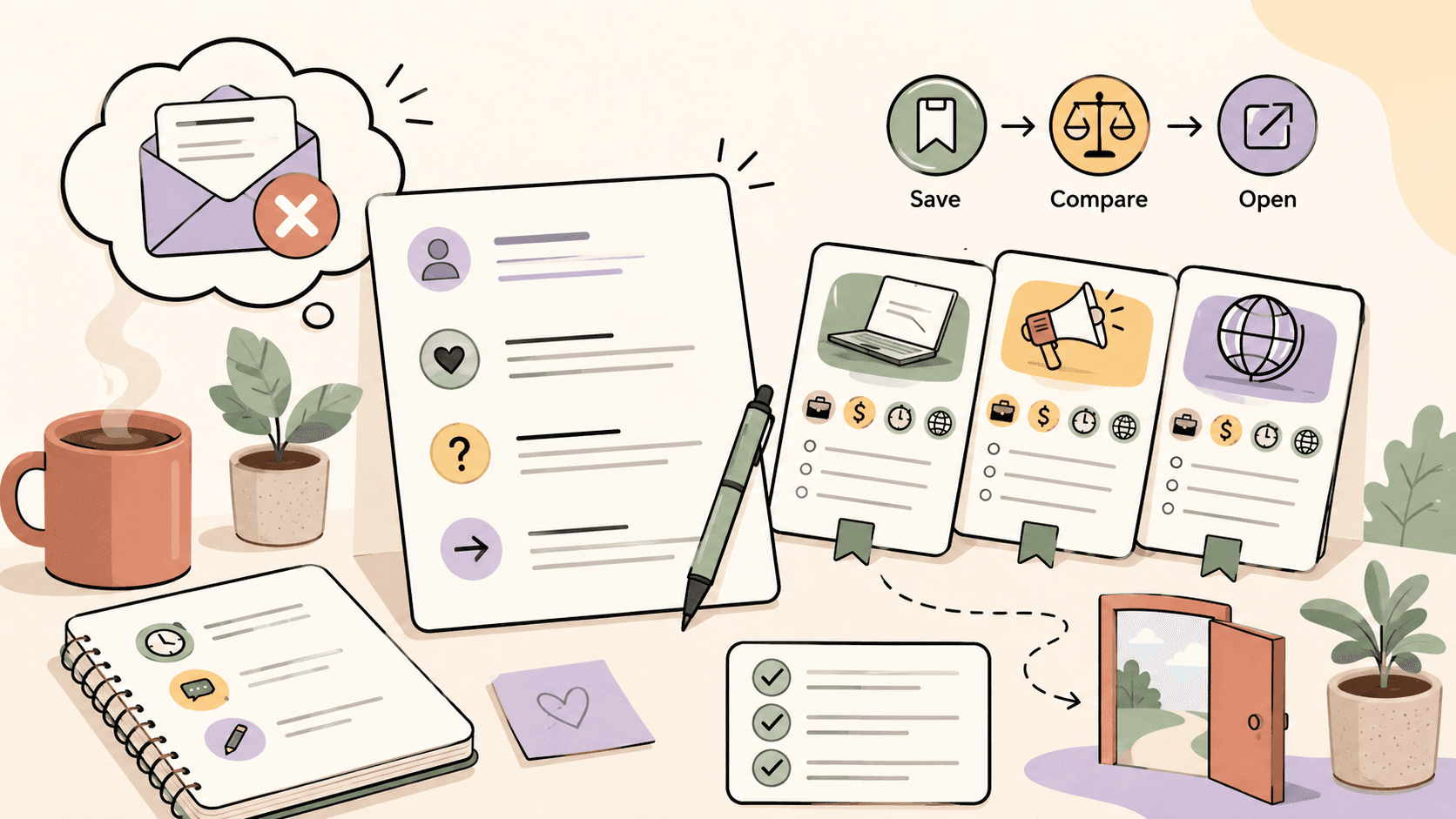
For people who monitor public communities and social platforms for freelance work, projects, or job leads, Sidequestboard offers one calmer place to review fresh opportunities instead of checking as many separate feeds. You can save a promising listing, open its original source, and decide independently whether to apply or respond. It does not replace your judgment or the employer’s application process.
A simple rejection-to-next-application checklist
Before closing the loop, check that you have:
- Replied within 24 to 48 hours when a personal response was appropriate.
- Used a clear subject line or kept the existing email thread.
- Thanked the hiring team and acknowledged the decision.
- Asked for specific feedback without demanding it.
- Avoided arguing, blaming, or oversharing.
- Sent no more than one feedback follow-up.
- Written down one improvement for your next application.
- Reviewed several relevant job boards or public communities.
- Saved opportunities worth researching instead of waiting on one employer.
The practical next step after a rejection is to keep your pipeline active. Review a few sources, save three relevant opportunities, and open each original listing before deciding how to proceed. Sidequestboard can support that review by bringing public job, freelance, and project leads into a cleaner feed, while you remain responsible for evaluating and responding to each opportunity.
A thoughtful reply will not reverse every rejection, but it can leave a better impression and occasionally lead to useful feedback or a future conversation. Send the message, learn what you can, and keep building your next set of options.