July 30, 2026
How to Handle Interviewers Wasting Your Time (Job Seeker Guide)
Interviewers waste your time due to disorganized hiring processes, free labor requests, or ghosting. You cannot control them, but you can control your pipeline. Diversify your search across public boards, set strict time limits on unpaid tasks, and use platforms like Sidequestboard to find fresh opportunities without the chaos.
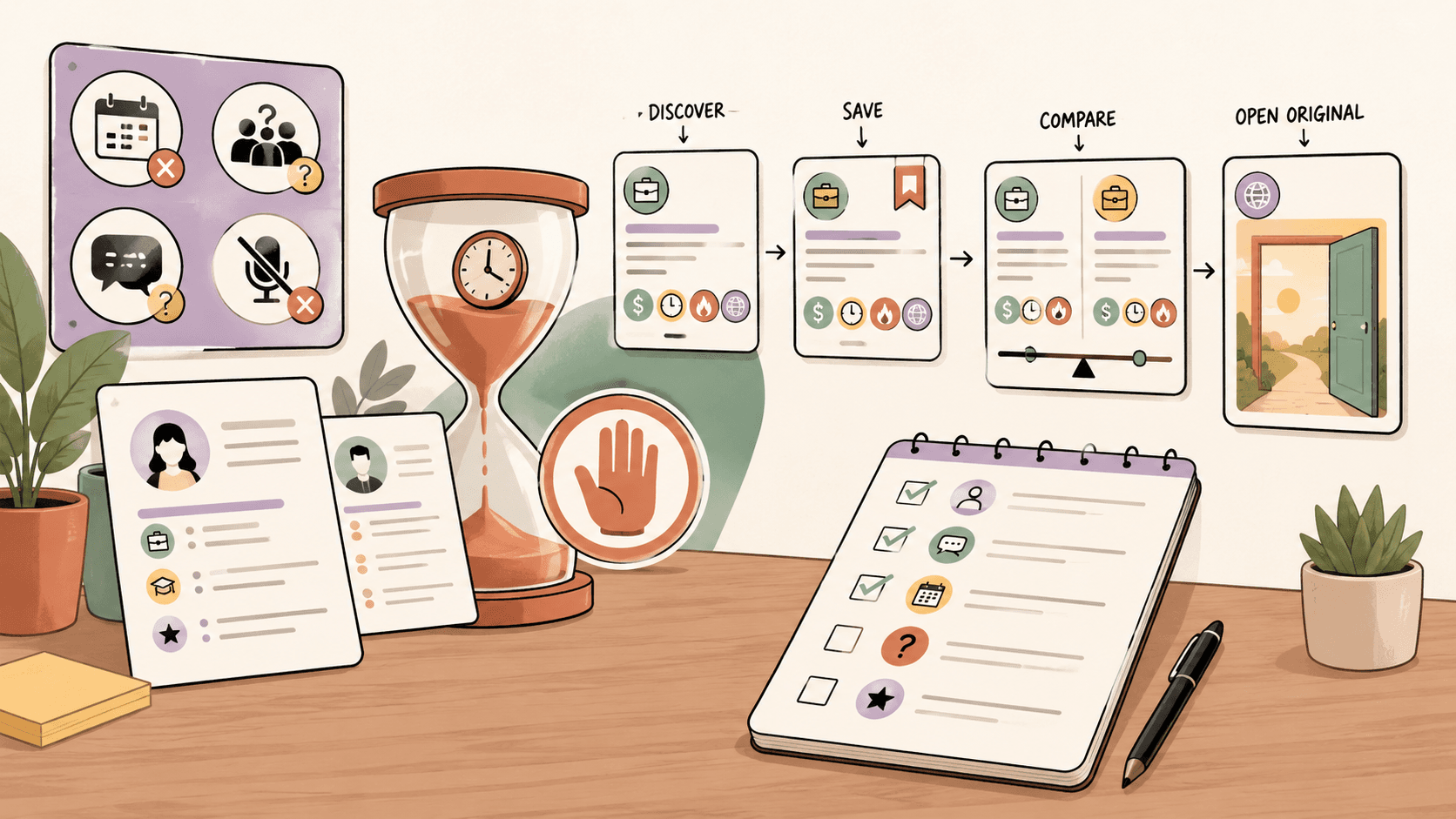
Why Do Interviewers Think It's Okay to Waste Your Time?
If you have ever sat through a five-round interview process only to get ghosted, you are not alone. Communities like r/recruitinghell and r/jobs are filled with stories of job seekers who invested dozens of hours into a company that disappeared.
Interviewers rarely set out to waste your time on purpose. Usually, it is a symptom of a deeper issue:
- Disorganized hiring processes with no clear timeline or decision-maker.
- Free labor requests disguised as "small" take-home assignments.
- Internal delays where the role is put on hold, but nobody tells the candidates.
- Comparison shopping where the company is already leaning toward an internal hire but keeps external candidates warm just in case.
You cannot fix a company's internal chaos. But you can control how much time you give them and how wide you cast your net.
How to Spot the Red Flags Early
You can usually identify a time-wasting process within the first two interactions. Watch for these specific warning signs:
- The Runaround: The scheduler keeps rescheduling or changing who you are supposed to meet with. This indicates poor internal coordination.
- Repeating Interviews: You are asked the same questions by different people across multiple rounds. This means they have not internally aligned on what they are looking for.
- Endless Take-Home Work: You are asked to create a detailed deliverable that looks suspiciously like real work.
- No Timeline: When you ask about next steps, the answers are vague. A serious employer can tell you roughly when they plan to make a decision.
Track fresh opportunities on Sidequestboard
How to Protect Your Time (Scripts Included)
You do not have to be rude to set boundaries, but you do have to be firm.
Setting Limits on Unpaid Tasks
If a company asks for a take-home assignment, ask for a time limit. A reasonable assignment should take no more than two to three hours.
Use this script:
"I am happy to complete a brief exercise to demonstrate my skills. To ensure I can deliver quality work alongside my current commitments, could you confirm the expected time limit for this task?"
If they expect a ten-hour project for free, politely decline.
Following Up Without Waiting
Do not pause your job search while waiting for a company to get back to you. The most common mistake job seekers make is stopping their outreach because they feel "close" to an offer.
Keep your pipeline moving. A healthy job search includes applying to new roles, networking, and exploring freelance or contract work daily.
Stop Treating One Opportunity Like the Only Option
The best defense against a time-wasting employer is a full pipeline. If one company ghosts you, it should be a minor inconvenience, not a financial crisis.
Diversify Your Search
Do not rely solely on traditional job boards. Many of the best opportunities come from public communities and social platforms where hiring managers post directly. You should be checking:
- Reddit communities like r/forhire and r/freelance
- Upwork for contract work
- X/Twitter where founders post open roles
- Discord servers for specific industries
The problem is that checking all these sources manually creates tab chaos. You spend more time searching than actually applying.
Find Fresh Opportunities in One Feed
This is where Sidequestboard helps. Instead of jumping between Reddit, X, Discord, and job boards every morning, Sidequestboard pulls fresh public opportunity posts into one cleaner feed. You can scan new gigs, freelance projects, and job leads in minutes, save the ones that look promising, and open the original source to apply directly.
It is designed for freelancers, solo builders, and job seekers who want to spend less time searching and more time pitching.
A Calmer Daily Job Search Workflow
When companies are wasting your time, you need a routine that keeps you grounded and proactive.
30 Minutes: Scan and Save
Use Sidequestboard to check your feed for fresh opportunities. Save anything relevant. Do not overthink it—just bookmark what catches your eye.
60 Minutes: Apply and Pitch
Take your saved opportunities and act on the best ones. Draft your cover letters, tailor your resume, or send a quick pitch. Tools like Notion can help you track where you applied and when to follow up.
15 Minutes: Follow Up
Send polite follow-up emails to companies you have interviewed with. If they do not respond within a week, move on.
Pivot to Side Gigs While You Wait
If your job search is dragging, consider taking on freelance or contract work. This is not just about income—though earning a few hundred to a few thousand dollars a month over time is realistic for skilled freelancers—it is also about keeping your skills sharp and your confidence high.
Platforms like Upwork, r/forhire, and public posts on X are common starting points. Sidequestboard can help you discover these types of opportunities faster by aggregating leads from multiple public sources into one dashboard.
When to Walk Away
You should walk away from an opportunity when:
- The process has lasted more than four weeks with no clear timeline.
- You are asked to do real, unpaid work that benefits the company.
- The interviewer is disrespectful of your scheduled time.
- You get a verbal offer but no written follow-up.
No job is worth sacrificing your dignity or financial stability. Protect your time, keep your pipeline full, and remember that the right opportunity will respect your value.