July 28, 2026
Is It Acceptable to Clock Out When Your Shift Ends? (And Is a Shift-End Timer Okay?)
Yes. It is generally acceptable to clock out when your scheduled shift ends, and a quiet timer or alarm can help you leave on time. Complete required handoffs, follow your workplace’s clock-out process, and never work off the clock. If repeated pressure to stay unpaid continues, document it and check official labor guidance.
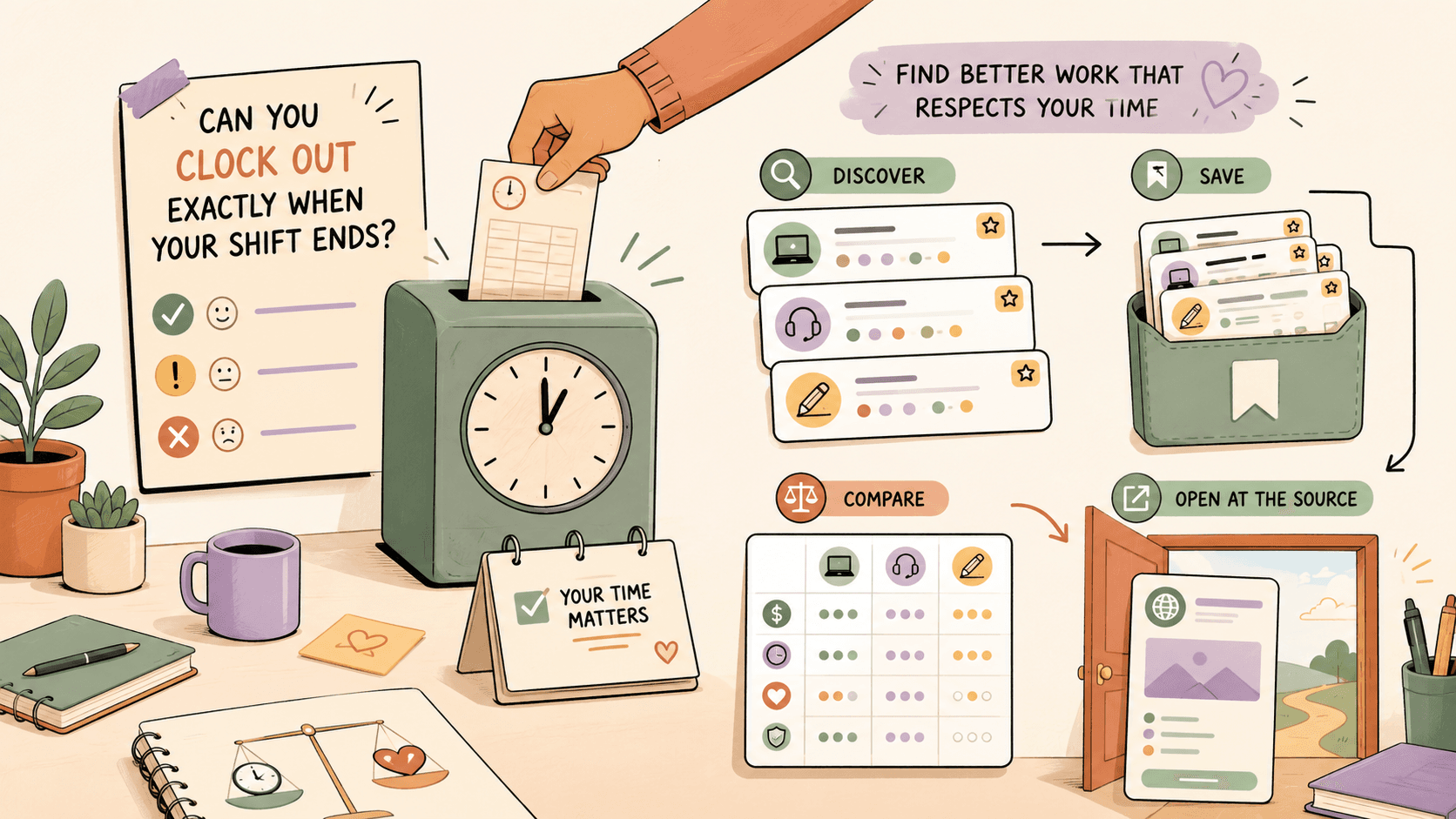
Is it acceptable to clock out when your shift ends?
Yes. If you have completed your scheduled hours and any required end-of-shift duties, clocking out on time is normally a reasonable and professional choice. A shift end is not automatically a request to keep working for free.
The important distinction is between finishing a required handoff and staying indefinitely because your workplace expects unpaid extra time. Your employer may have rules about closing procedures, customer coverage, equipment shutdown, or transferring work to the next person. Follow those procedures, but record all time you are required to work.
For wage-and-hour questions, rules depend on your location, employment status, and circumstances. In the United States, the Department of Labor’s Fair Labor Standards Act guidance explains federal rules about covered employees, hours worked, and pay. Check the official guidance for your situation, along with your state or local labor agency and workplace policy.
Is setting a timer for your shift end good or bad?
A private, quiet timer is generally fine. It can help you notice the end of your scheduled shift without repeatedly checking the clock, especially during a busy shift or remote workday.
Use it in a way that does not disrupt coworkers or customers:
- Set a vibration, silent, or low-volume alarm.
- Give yourself enough time to complete a normal handoff.
- Do not use the timer as a reason to abandon a customer, safety task, or required closing step.
- If your workplace uses a time clock, follow its normal clock-out process rather than relying only on your phone.
The timer is a reminder, not permission to leave in the middle of an urgent task. It also should not be treated as a reason to keep working without recording the time.
What should you do when the timer rings?
Use a simple three-step check:
- Finish the immediate task safely. Do not leave equipment, a customer, or a time-sensitive responsibility unattended.
- Complete the required handoff. Tell the next worker or supervisor what is unfinished and where the relevant information is.
- Clock out and leave. If more work is required, ask how that time should be recorded.
A concise handoff might sound like:
“My scheduled shift ends now. I have finished the urgent items, and the remaining order is ready for the next shift to continue. I’m clocking out.”
For remote work, send the handoff in the channel your team actually uses, such as Slack or Microsoft Teams. If the team tracks tasks in Notion or Google Docs, update the relevant item before clocking out when that is part of your paid duties.
What if your manager asks you to stay after your shift?
Ask for clarity rather than silently working. You can say:
“I can stay if needed. Should I remain clocked in, and how should I record the additional time?”
That question creates a clear record of whether the extra work is authorized and paid. If the answer is that you must stay but cannot record the time, ask for the instruction in writing when practical and keep your own factual notes.
Examples of useful documentation include:
- the date and scheduled end time;
- the time you actually stopped working;
- what task or handoff required the extra time;
- who gave the instruction;
- whether the time appeared on your time record or paycheck.
Keep the notes factual. Do not exaggerate, alter time records, or copy confidential customer or company information into a personal file.
How should you handle common shift-end situations?
| Situation | Practical response |
|---|---|
| A customer is already being helped | Finish the immediate interaction or transfer it according to policy, then clock out. |
| The next worker is late | Notify the supervisor and ask how coverage time should be recorded. Do not assume the gap is unpaid. |
| A warehouse or retail closing task remains | Complete the required task if you are directed to do so, and record the time worked. |
| A remote manager sends a new request at clock-out | Reply that your scheduled hours have ended and ask whether the task is for your next paid shift or requires approved extra time. |
| Coworkers imply that leaving on time shows poor commitment | Stay professional. Meeting your schedule is different from refusing a required, paid handoff. |
| You are repeatedly pressured to work off the clock | Keep records, review company policy, and seek advice from the appropriate labor authority or a qualified adviser. |
What can you say when you need to leave on time?
The best script is brief and neutral. Try one of these:
Hourly employee:
“My scheduled shift ends at 5 p.m. I’ve completed the required tasks and will clock out now. If there is additional work, please let me know how to record that time.”
Cashier or customer-facing worker:
“I’ll finish this customer interaction and hand over the register. After that, I’ll clock out at the end of my scheduled shift.”
Warehouse worker:
“The safety check is complete. The remaining items are staged for the next shift, so I’m recording my end time and leaving.”
Remote worker:
“I’m at the end of my scheduled hours. I’ve updated the task and posted the handoff in Slack. I’ll pick up anything remaining during my next shift.”
These statements avoid turning a normal boundary into an argument. If your supervisor gives a different instruction, ask whether the additional time is paid and how it should be entered.
When is staying late a warning sign?
Occasional extra time may happen in many jobs. A repeated pattern is more concerning, especially when:
- managers routinely expect work after clocking out;
- employees are discouraged from correcting inaccurate time records;
- staying late is treated as a condition of keeping the job;
- required meetings, setup, cleanup, or handoffs are excluded from paid time;
- workers are praised for being available but are not given a way to record the time.
A single awkward shift does not necessarily define an employer. A consistent expectation of unpaid work is different. Review your records, ask for the policy in writing, and use official labor resources for guidance relevant to your location.
Could repeated unpaid-work pressure be a reason to look for another job?
It can be one signal to evaluate alongside pay, management, scheduling, workload, and growth opportunities. You do not have to quit immediately to start exploring alternatives. You can continue meeting your current obligations while quietly researching roles, projects, and other work leads.
Public opportunity sources can include Reddit communities such as r/jobs, LinkedIn, Discord communities, and other professional or industry groups. Check each community’s rules and the original listing before responding, and be cautious with requests for upfront payments or sensitive personal information.
If you are monitoring several communities, Sidequestboard can help you monitor public opportunity sources in one feed, save promising leads while you are still employed, and open the original listing when you are ready to respond. It is a discovery and organization tool, not a substitute for checking the source or evaluating an employer.
A simple decision checklist
Before you clock out, ask:
- Have I completed the immediate safety or customer responsibility?
- Have I completed the required handoff?
- Am I still working, or am I already off the clock?
- If I need to stay, have I asked how to record the time?
- Do I have a factual record if this happens repeatedly?
If the answers are clear, clocking out at the end of your scheduled shift is generally a normal workplace boundary. A quiet timer can support that boundary as long as it does not replace required handoffs or safe work practices.
Sources
- U.S. Department of Labor — FLSA Hours Worked (Fact Sheet #22)
- Contra — Pricing — Official platform fee information; verify current terms before relying on pricing.
- Fair Labor Standards Act guidance — Official or institutional source referenced in the article body.