July 21, 2026
Prioritize Remote Work Leads Without Marketplaces: A 5-Factor Scoring Method
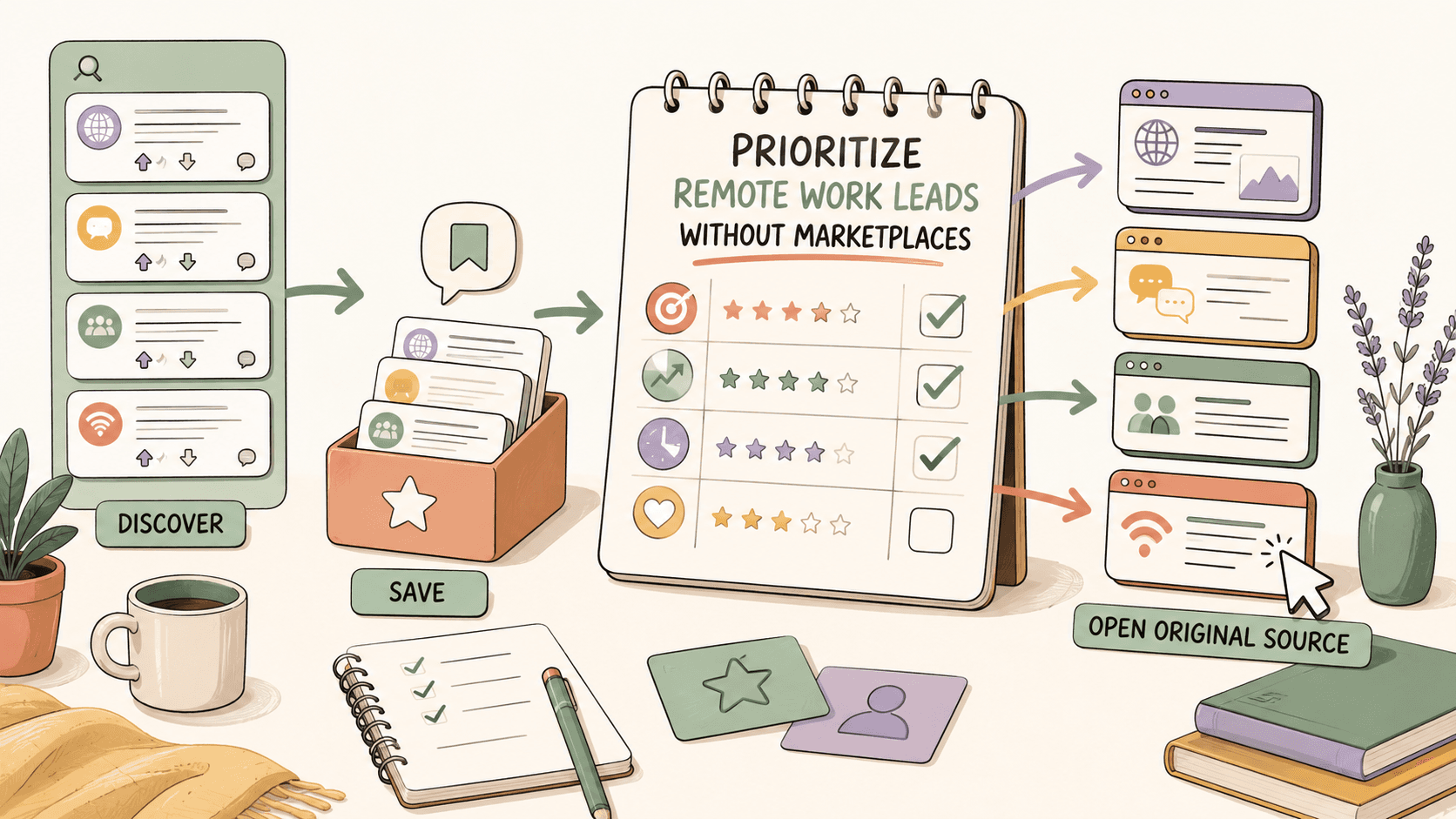
To prioritize remote work leads without marketplaces, score each lead 0–2 on five factors: fit, freshness, poster legitimacy, scope and rate clarity, and effort to respond. Reply immediately to totals of 8–10, batch 5–7 for later today, and park 4 or below. Any lead with a legitimacy score of 0 gets skipped regardless of total.
Why Should You Look Beyond Marketplaces for Remote Work Leads?
Bidding marketplaces ask you to compete on price and profile history, and each has its own fee structure, so check the platform's official pricing or help page before you rely on it. Public posts let you pitch the person hiring directly and agree your own terms. You also lose platform protections, which is why the vetting section below matters.
Curated boards and LinkedIn are not bidding marketplaces, because you apply to the employer rather than outbid rivals, but they can be crowded. That is a reason to check smaller public sources as well. If you want to avoid boards entirely, communities such as Reddit and company career pages are the fully non-board options. The scoring method below works on a lead from any source.
How Do You Prioritize Remote Work Leads Without Marketplaces?
Give every lead a score from 0 to 2 on each factor below, then add them up. The thresholds are a working heuristic, not a law. Adjust them after a few weeks of seeing which leads actually reply.
| Factor | 2 points | 1 point | 0 points | Where to check |
|---|---|---|---|---|
| Fit | Core skill and tools match | Partial match | Stretch or unrelated | Post requirements |
| Freshness | Under 24 hours old | 1–3 days old | Older than 3 days | Post timestamp |
| Poster legitimacy | Named company, working site, real history | Some details, gaps | Anonymous or red flags | Company site, poster profile |
| Scope and rate clarity | Scope plus rate or budget | Scope or rate, not both | Neither | Post text |
| Effort to respond | Short email or message | Needs a tailored sample | Long application or test | Application link |
Tiers:
- 8–10: reply now. Respond within hours.
- 5–7: reply today. Batch these into one focused block. For full-time roles, this window can stretch to a day or two (see the lead-type table below).
- 0–4: park. Revisit only if the post adds new information, and delete it if nothing improves within about three days.
- Legitimacy of 0: skip, whatever the total.
Worked example: four hypothetical leads
These leads are illustrative, not real postings.
| Lead | Fit | Fresh | Legit | Scope | Effort | Total |
|---|---|---|---|---|---|---|
| A: React dashboard contract on r/forhire, posted 2 hours ago, named startup, budget range stated | 2 | 2 | 2 | 2 | 1 | 9 |
| B: Part-time UI design role on We Work Remotely, 3 days old, no rate | 2 | 1 | 2 | 1 | 1 | 7 |
| C: Full-time product role on LinkedIn, 10 days old, long application | 1 | 0 | 2 | 2 | 0 | 5 |
| D: "Developer needed ASAP", anonymous poster, new account, wants to move to Telegram | 1 | 2 | 0 | 0 | 2 | 5 |
The order is A, then B, then C if you have time. D ties C on 5, but its legitimacy of 0 removes it. Scores also change: if B's poster later adds a budget, scope rises to 2, the total becomes 8, and B moves into the reply-now tier.
Where Do Fresh Remote Work Leads Come From?
Public communities are best for freshness and direct contact. Read each community's rules before posting or messaging.
- r/forhire: freelance and contract posts. Look for hiring-tagged posts and sort by New.
- r/RemoteJobs: full-time and contract remote roles. Sort by New.
Curated boards are more structured, but expect more applicants.
- We Work Remotely: categories for programming, design and marketing, free to browse.
- Remote.co: roles beyond pure tech, such as customer success and operations.
- Wellfound: startup roles you can filter to remote.
- LinkedIn Jobs: a remote filter, saved alerts, and mutual connections who can refer you.
- FlexJobs: a paid board that screens listings. Screening lowers scam risk but never removes it.
Company career pages are best for full-time roles, since your application goes straight to the employer.
How Should Triage Change by Lead Type?
The same score means different things for different kinds of work.
| Lead type | Weight most | Reply speed |
|---|---|---|
| One-off gig | Freshness, scope and rate clarity | Within hours |
| Contract | Fit, legitimacy | Same day |
| Full-time role | Fit, effort to respond | Within a day or two |
For gigs, speed beats polish. For full-time roles, a tailored application beats a fast generic one, so a stale posting with great fit can still deserve a slot.
How Do You Vet a Lead Before Spending Time on It?
Run these five checks in order and stop at the first failure. For a deeper look at judging clients from public posts, see how to evaluate freelance work from public communities.
- Confirm the company domain. Look for a working website, a team page and an independent web presence.
- Check the poster's history. A brand-new account with no history lowers the legitimacy score.
- Get scope and payment terms in writing before any call.
- Refuse upfront payments or equipment purchases, including anything involving a "vendor check."
- Stay on traceable channels such as email or on-platform messages until verified. Be wary of a stranger pushing you to Telegram or WhatsApp immediately.
Three further red flags usually mean a legitimacy score of 0 or 1: no company name, unusually high pay for vague work, and no stated scope or next steps.
How Do You Track and Triage Leads Every Day?
Create a spreadsheet, Notion database or Trello board with these columns:
Source URL | Date posted | Lead type | Fit | Freshness | Legitimacy | Scope/rate | Effort | Total | Next action | Reply sent
If you would rather not maintain a spreadsheet at all, there is a lighter-weight way to prioritize remote work leads without spreadsheets.
Then run a 20-minute daily block:
- Scan your sources and log only leads with a fit of at least 1.
- Score each lead and sort by total.
- Reply to the top tier first.
- Re-check second-tier leads once later that day for new information, such as an added budget.
- Park everything else and move on.
A React developer scanning r/forhire, for example, would score a three-hour-old dashboard post from a named company as a 9 and answer it before touching anything else.
How Can You Stop Checking Dozens of Tabs Every Day?
Visiting several subreddits, boards and LinkedIn each morning eats the time that freshness rewards. Step 1 of the routine above is where that time goes. Sidequestboard is an iPhone app that surfaces fresh public opportunities from communities and social platforms in one feed, so you can use your saved items in place of opening each subreddit and board. Save the promising ones, open the original listing at its source, then score the saved leads in your tracker. Check in the app which sources it currently covers. It is not a marketplace: there is no bidding, and it does not sit between you and the poster. You still score and vet each lead yourself.
How Do You Respond to Leads Before They Go Cold?
Fresh posts often attract replies quickly, so treat the first day as your window. Keep a boilerplate reply, but personalize the first two sentences around the project they described. Then state your rate or availability, ask one specific question about their work, link your portfolio, and stop typing.
If the scope is vague, ask for scope and budget in writing before you invest in a proposal.
FAQ
How many leads should I pursue per day?
A reasonable cap is three to five tailored replies. Start with leads scoring 8–10, then fill remaining time from the 5–7 tier. Quality replies to well-scored leads beat a dozen generic ones.
What should I do with stale leads?
Park them. A lead older than three days loses freshness points, but strong fit and a named employer can still justify one tailored reply, especially for full-time roles.
Should I check boards or communities first?
Check communities first for gigs and contracts, since their posts are freshest and reach the poster directly. Check boards and company career pages first for full-time roles.
How do I handle a lead with no stated rate?
Score scope and rate clarity at 0 or 1, then ask for budget and scope in writing before drafting a proposal. If the poster will not share either, deprioritize the lead.