September 15, 2026
What Job Seekers Should Learn From Finally Landing a Job Through a Recruiter
Landing a job through a recruiter usually comes down to fit, speed, and clear communication. Keep a targeted resume ready, explain your strongest skill in one sentence, verify the recruiter and employer, and follow up promptly. Also monitor public communities such as r/forhire, Dribbble Jobs, and Behance for opportunities you can pursue directly.
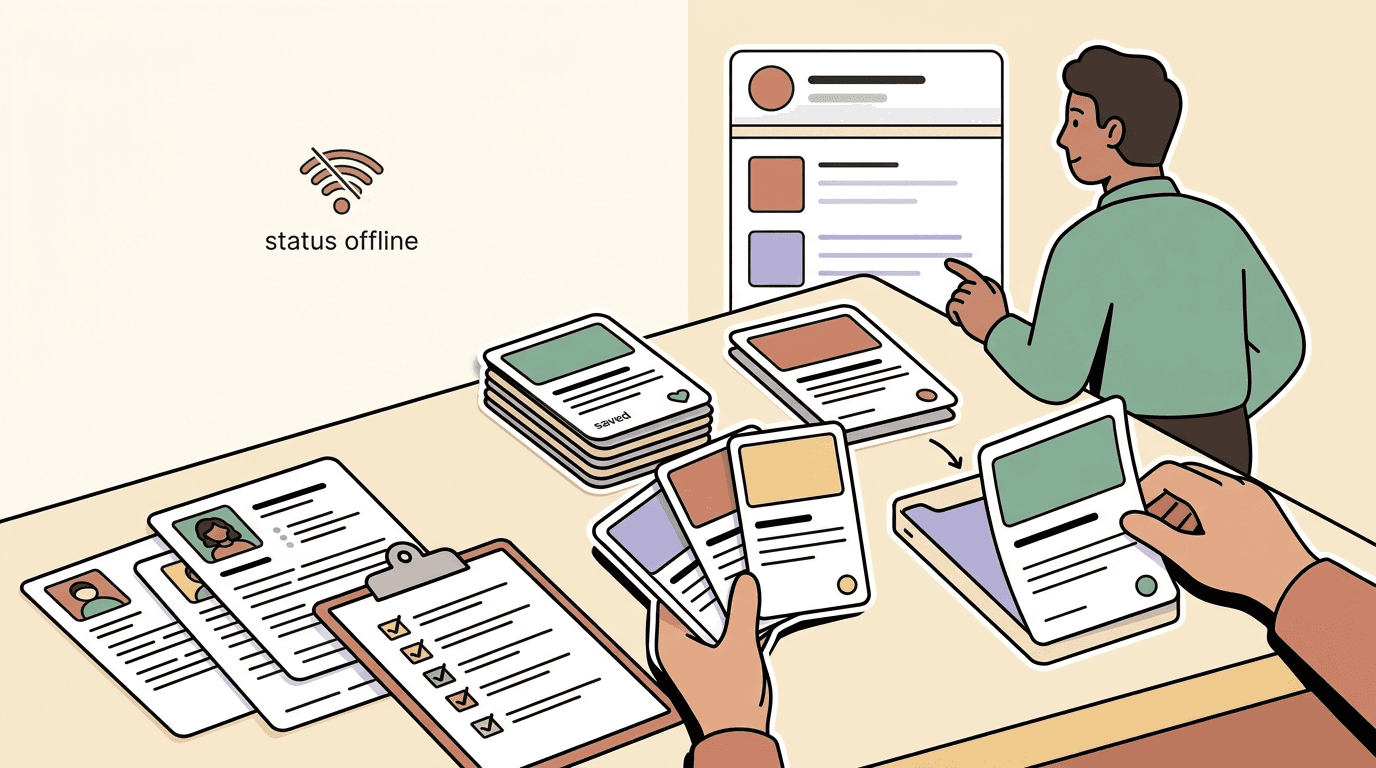
What can job seekers learn from landing a job through a recruiter?
A successful recruiter-assisted search usually reveals four practical habits:
- The candidate has a clear fit. The recruiter can quickly explain what role, industry, tool, or level matches the candidate.
- The candidate is prepared. A current resume, portfolio, work samples, availability, location, and compensation expectations are ready before the first call.
- The candidate responds quickly. Fresh roles can move from initial contact to a screening call in days, especially for contract or project work.
- The candidate verifies the opportunity. The recruiter’s identity, employer, job description, interview process, and contact details should be checked before sharing sensitive information.
The same habits work outside recruiter networks. On r/forhire, which has about 1.3 million members, a useful response is specific enough for the poster to understand your fit without opening five unrelated links. On r/designjobs, with about 150,000 members, the [Hiring] flair helps narrow the feed to design projects.
Write a one-sentence positioning statement today, such as: “I’m a product designer who helps early-stage SaaS teams improve onboarding flows, with recent work in Figma and a portfolio focused on measurable usability improvements.”
How should you prepare before contacting recruiters?
Recruiters work faster when the basic questions are already answered. Prepare a version of your resume for the role family you want, not a single document that tries to cover every career direction. A design candidate might maintain separate versions for product design, brand design, and visual design.
Your top third should communicate the target role, strongest tools, relevant sector, and location or remote availability. Put outcomes beside responsibilities. “Redesigned checkout” is weaker than “Redesigned checkout flow and reduced the number of steps from five to three,” provided the result is accurate and documented.
Keep a portfolio with three to six relevant pieces. Each case study should explain the problem, your contribution, the constraints, and the result. If you are pursuing freelance or contract work, add a short services page with scope examples, availability, and starting project information. Do not hide every useful detail behind a recruiter call.
Prepare a short answer for compensation. Research data supplied for this topic places common design benchmarks around $30-$100 per hour for graphic design, $50-$150 per hour for UI design, $50-$500 or more per illustration, and $200-$2,000 or more for logo design. These are broad market benchmarks, not promises. Your rate should reflect scope, experience, revision limits, urgency, and whether the work includes strategy or production.
Before your next recruiter conversation, create a one-page “match sheet” listing your target roles, strongest evidence, availability, location, compensation range, portfolio URL, and three questions about the position.
Where can you find opportunities when recruiters are not reaching out?
Recruiters are only one channel. Public communities and specialist boards can expose you to work before it reaches your usual search routine.
- r/forhire: Search for “designer” or “design” inside [Hiring] posts. Sort by New, read the complete request, and follow the poster’s requested response format.
- r/designjobs: Check the [Hiring] flair for design projects. Read the poster’s account history and avoid sending work before confirming the brief and payment terms.
- r/Design: Use discussions for networking and lead discovery rather than dropping unsolicited promotions. Answer a relevant question, then move to a private conversation only when appropriate.
- Dribbble Jobs: Browse Dribbble’s jobs page for UI/UX, graphic design, and illustration roles. It is free to browse, so use the filters and save a small shortlist rather than applying indiscriminately.
- Behance: Review the Behance Joblist for creative design roles. Match the work shown in your Behance profile to the role before responding.
- 99designs: Use 99designs to evaluate logo and branding design contests. Contest commissions vary, so read the current official terms and decide whether the brief, prize, and time investment make sense for you.
A practical search routine takes 20 to 30 minutes. Spend the first 10 minutes checking r/designjobs and r/forhire, the next 10 minutes reviewing Dribbble Jobs and Behance, and the final few minutes drafting one tailored response. Record the source, URL, date found, contact, status, and follow-up date in Notion or Trello.
Run this routine once today and save only opportunities that match your skill, location, availability, and minimum acceptable compensation.
How do you respond to a fresh public opportunity?
A strong response resembles a recruiter-ready introduction. It answers the poster’s actual request and makes the next step obvious.
Use this structure:
Hi [name], I saw your [specific project or role] post. I’ve worked on [relevant type of work], including [brief proof point]. I can start [availability] and can deliver [defined scope]. Here is the most relevant sample: [link]. My typical range for this scope is [rate or project range]. Would you like me to send a short plan and timeline?
Do not paste the same message into every r/forhire post. If someone requests a subject line, use it. If they ask for a portfolio and rate, include both. If the request is for a logo, show branding work instead of leading with a mobile app redesign.
Here is a concrete walkthrough. Suppose a three-hour-old r/forhire post asks for a landing-page designer for a startup. First, check that the post is marked [Hiring] and read the account history for context. Next, open your portfolio to the strongest landing-page example. Then write two sentences connecting that example to the requested audience and deadline. Add your availability, a realistic scope-based estimate, and one question about the number of pages or revision rounds. Save the post in your tracker and set a follow-up reminder for two business days.
That response is more useful than “Interested, DM me,” because it gives the poster enough information to decide whether a conversation is worthwhile. Send one tailored response now to a listing on r/forhire, r/designjobs, Dribbble Jobs, or Behance Joblist.
How should you verify a recruiter or opportunity?
A recruiter should be able to explain the employer or client, role, work arrangement, compensation process, interview stages, and expected timeline. Verify the recruiter’s email domain, LinkedIn history, agency website, and the existence of the employer through independent sources. A polished message is not proof of legitimacy.
Be cautious when someone asks you to pay for access to a job, buy equipment from a specific vendor, deposit a check and return money, or provide sensitive identity or banking information before a legitimate hiring process. Ask for the official job description and apply through the employer’s known website when possible.
For public communities, inspect the original post rather than relying on a screenshot or forwarded message. On r/Design, a useful discussion can lead to a real connection, but you still need to confirm the project privately. On 99designs, review current contest and payment terms on the official site because platform terms can change.
Use a simple verification checklist before moving forward: identifiable poster, clear scope, credible contact method, reasonable interview or brief process, written compensation terms, and no upfront payment request. Apply this checklist to your next opportunity before replying.
How can you improve your odds after the first conversation?
The first conversation should become a decision, not an indefinite exchange. Ask what problem the employer needs solved, what success looks like, who approves the work, what the timeline is, and what the next step will be. For a recruiter, ask whether they are representing the employer directly, whether the role is contract or permanent, and whether your profile has already been submitted.
Send a concise follow-up the same day. Confirm the role, your understanding of the need, the relevant evidence you discussed, and the agreed next step. If you promised a case study or work sample, send it in the same message instead of making the recruiter chase you.
Track every conversation in Trello or Notion using columns such as New, Contacted, Screening, Interview, Waiting, and Closed. Add the last contact date and next action. A five-minute update prevents duplicate applications and makes follow-up precise.
For freelance work, define the first deliverable before agreeing to a large project. A logo engagement might begin with a paid discovery or concept phase, while a UI project might start with an audit and annotated recommendations. Use the research benchmarks as a starting reference, then adjust for the actual scope. Update your tracker immediately after each call.
How can you combine recruiter outreach with a calmer search routine?
Recruiter outreach works best when it is one part of a system. Set aside a daily or every-other-day search window rather than refreshing every platform all day. Review the freshest relevant posts, save the best ones, and respond while the request is still current.
Sidequestboard can help with this specific discovery problem by bringing fresh public opportunities from communities and social platforms into one curated dashboard. You can save relevant opportunities, open the original source, and apply or respond there. It does not replace a recruiter, guarantee work, or act as a middleman. Its value is reducing tab chaos so you can spend more time tailoring the response.
For example, a designer could use Sidequestboard to find a fresh public design opportunity, save it, open the original r/forhire or community listing, and send the same recruiter-quality message described above. The application still happens at the original source, where the poster or employer provided the opportunity.
Build a repeatable schedule: discovery in the morning, tailored responses immediately after, and follow-up review twice per week. Start by creating a saved list of your top three opportunity types and checking them during your next search window.
Which income route fits your current situation?
A recruiter-assisted full-time role is not the only way to create momentum. Choose based on how quickly you need income and how much uncertainty you can handle.
- Freelance in your current skill: Research estimates time to first pay at roughly one to four weeks, with potential of about $500-$5,000 per month. This suits people with a portfolio and a service they can sell immediately.
- Part-time remote contract work: Time to first pay may be around one to three weeks, with potential of roughly $500-$3,000 per month. This can fit candidates who need predictable hours without leaving a current role.
- Sell a digital product: A template, course, or guide may take two to six weeks to produce and sell, with potential ranging from $100-$10,000 per month. Results depend heavily on audience and distribution.
- Weekend gig work: Delivery or task work can produce first pay in one to three days, with potential around $200-$1,500 per month. It can provide speed while a longer job search continues.
Use r/personalfinance for income comparison and financial planning discussions, r/beermoney for quick extra-income ideas, and r/sidehustle for side-income strategies and success stories. Treat community posts as ideas to investigate, not guaranteed outcomes.
Choose one primary route and one backup route, then define a seven-day target such as five tailored applications, three recruiter conversations, or two paid pitches.
What should you do this week?
Start with preparation on day one: update your resume, portfolio, availability, positioning statement, and rate or salary range. On day two, inspect r/designjobs, r/forhire, Dribbble Jobs, and Behance Joblist. On day three, send two tailored responses and contact relevant recruiter connections. On day four, review r/Design discussions and add useful professional comments. On days five through seven, follow up and refine the message based on responses.
Keep the process measurable. Track opportunities found, qualified responses sent, conversations started, follow-ups completed, and outcomes. If you send ten generic applications and receive no response, changing platforms alone will not solve the problem. Improve the match statement, evidence, scope clarity, or response speed.
The practical lesson from landing work through a recruiter is simple: make your fit obvious, prepare proof, respond while the opportunity is fresh, and follow through professionally. Start your seven-day plan today with one updated portfolio link and one carefully tailored response.
What questions do job seekers ask about recruiters?
How do I get noticed by a recruiter?
Make your target role obvious in your resume, LinkedIn headline, portfolio, and first message. Include relevant tools, industry experience, location or availability, and one or two proof points instead of sending a generic introduction.
Is applying through a recruiter better than applying directly?
Neither route is automatically better. A recruiter may provide context and coordinate communication, while a direct application gives you control over the original listing. Use both and avoid duplicate submissions unless the recruiter confirms the process.
Where can designers find fresh opportunities besides recruiters?
Check r/designjobs, r/forhire, Dribbble Jobs, Behance Joblist, and relevant discussions in r/Design. Review the original post, verify the poster, tailor your response, and apply or respond through the stated channel.
How quickly should I respond to a recruiter or public opportunity?
Respond as soon as you can with a complete, relevant message. For fresh public posts, checking within the same day is useful because early, qualified responses are easier for the poster to review.
What should I send in my first response?
Send a short fit statement, one relevant result or sample, your availability, your expected rate or salary range when appropriate, and one clear next step. Avoid sending a large portfolio without explaining which work matters.
Can Sidequestboard guarantee a job or recruiter introduction?
No. Sidequestboard is a curated opportunity discovery dashboard, not a recruiter, hiring platform, or guaranteed job source. It helps users find fresh public opportunities, save relevant listings, open the original source, and apply or respond directly.
Ready to spend less time checking scattered communities? Try Sidequestboard to discover and save fresh public opportunities in one calmer feed.
Sources
- Contra — Pricing — Official platform fee information; verify current terms before relying on pricing.
- Dribbble — Source consulted for the article research.
- Behance — Source consulted for the article research.
- 99designs — Source consulted for the article research.
Sources
- Contra — Pricing — Official platform fee information; verify current terms before relying on pricing.
- Dribbble — Source consulted for the article research.
- Behance — Source consulted for the article research.
- 99designs — Source consulted for the article research.