August 26, 2026
10 Best Freelance Platforms for Designers (Graphic Design & Illustration Compared)
The best freelance platforms for designers are Upwork for project briefs, Fiverr for packaged design services, Contra for portfolio-led discovery, Toptal for screened senior work, 99designs for contest-based design, and PeoplePerHour for a hybrid of services and briefs. Match the platform to your workflow: posted briefs if you like proposals, packaged services if your deliverables repeat, portfolio-led channels if presentation is your strength, and screening-gated marketplaces if you can wait for evaluation. Before committing, compare the type of design work posted, how clients contact you, current fees and payout terms, and the weekly time each profile requires.
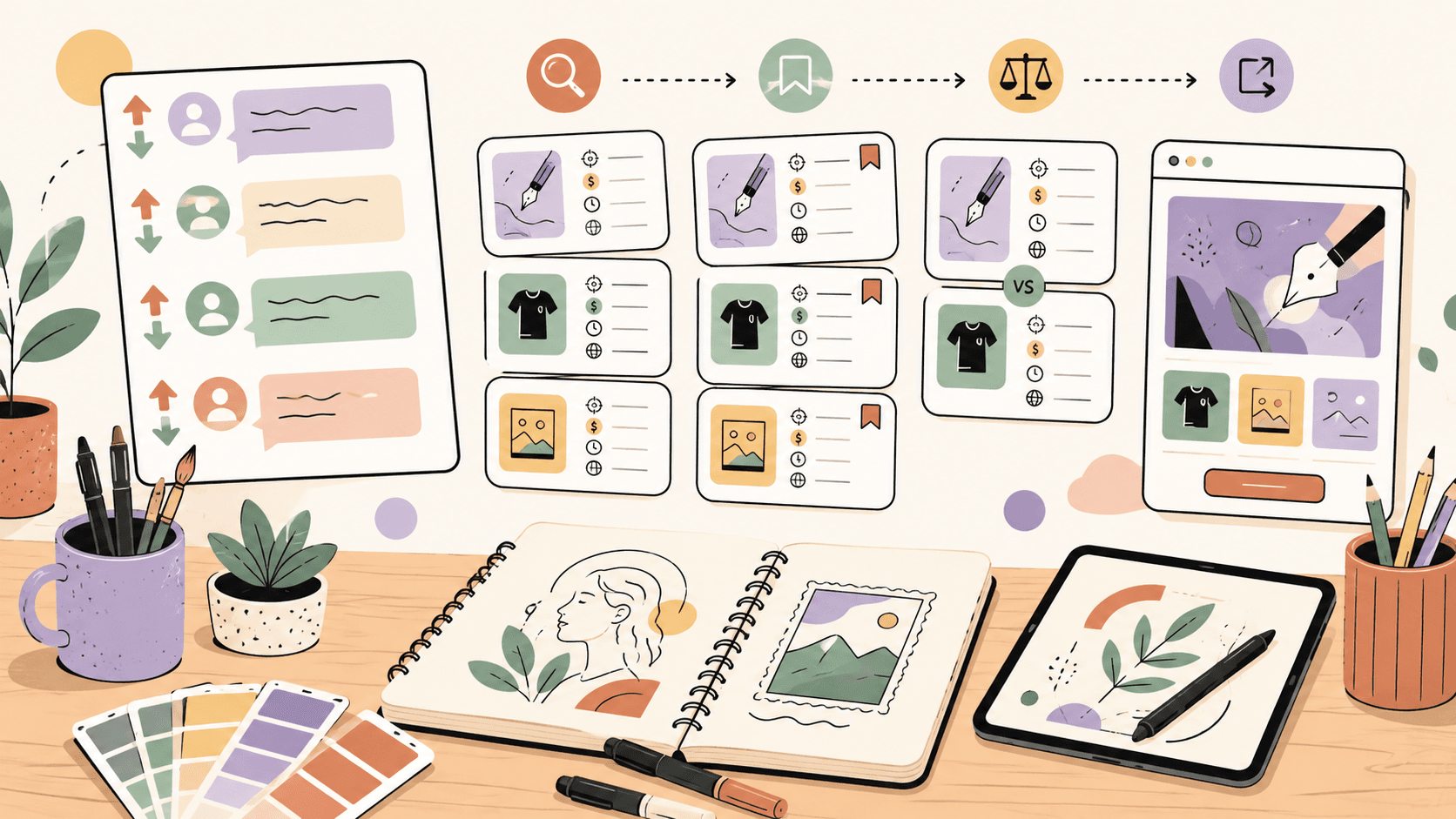
What are the best freelance platforms for designers?
There is no universally best platform for every graphic designer, illustrator, UI designer, or motion designer. The strongest choice depends on whether you want to apply to posted projects, sell a repeatable service, attract inquiries through a portfolio, enter a contest-based marketplace, or pass a screening process.
- Upwork is a practical starting point for designers who prefer reviewing briefs and submitting tailored proposals. It can suit branding, presentation design, packaging, illustration, UI design, and other project-based work when the brief is clear.
- Fiverr is more suitable when you can define a specific service with a predictable deliverable, such as a logo concept package, custom character illustration, social media asset set, or presentation template.
- Contra and PeoplePerHour support profile-led discovery as well as project opportunities. They may suit designers who want their portfolio, services, and professional positioning to do more of the initial selling.
- 99designs runs a contest model: clients post a design brief, multiple designers submit concepts, and the client picks a winner. It can suit designers comfortable with speculative work in exchange for direct access to design-focused buyers — a trade-off you should weigh honestly.
- Toptal is for designers willing to prepare for a selective screening process. It is not the right choice if you need immediate access to open listings without an evaluation step.
- Behance operates as a portfolio and professional visibility network (with freelance-oriented profile features in some regions), while Dribbble combines portfolio visibility with job-board and client features. Both can help clients discover your work, but they do not operate in exactly the same way as a marketplace.
- Working Not Working and curated design job boards (such as Krop, If You Could Jobs, or AIGA's job board) list opportunities aimed specifically at creative professionals, including in-house, contract, and freelance roles.
- Reddit, Discord, and other public communities can reveal informal project posts, commission requests, and calls for contributors. These leads require more independent verification than a standard platform listing.
A useful decision rule is simple: choose posted briefs if you like proposals, packaged services if your deliverables are repeatable, contest platforms if you accept the speculative model, portfolio-led discovery if presentation is your strength, and selective marketplaces if you are comfortable with screening. The table below provides a faster comparison.
Freelance platforms for designers at a glance
| Platform | Best for | How work is found | Typical fees (verify current) | Main limitation or caution |
|---|---|---|---|---|
| Upwork | Designers who prefer project briefs and tailored applications | Browse listings and submit proposals | Percentage service fee on earnings; Connects cost for proposals; fee tiers have changed over time — check the official pricing page | Proposal time and project terms vary |
| Fiverr | Repeatable, clearly defined design services | Clients discover and purchase service listings | Percentage commission on completed orders (historically 20%) — verify current seller terms | Broad listings attract mismatched requests |
| Contra | Portfolio-led independent professionals | Profile discovery and project opportunities | Advertised as commission-free; confirm current payment-processing terms | Results depend heavily on profile positioning |
| PeoplePerHour | Freelancers combining service profiles with project responses | Profile discovery, service offers, and briefs | Service fee on earnings plus optional proposal credits; verify current rates | Value depends on current brief quality in your niche |
| Toptal | Designers prepared for screening | Access follows an evaluation process | Negotiated rates; platform margin not published — verify during application | Screening is time-consuming and not guaranteed |
| 99designs | Contest-based logo and identity work | Clients post contests or hire directly (1-to-1) | Platform fees and contest entry dynamics; verify current designer fees | Losing contests means unpaid work |
| Dribbble (jobs/clients) | Designers building visibility plus a job-feed habit | Job board, profile discovery, Pro features | Subscription tiers for enhanced visibility — verify current pricing | Visibility features require paid plans |
| Behance | Portfolio-led discovery with context-rich case studies | Adobe ecosystem discovery and freelance profile features | Free at base level; verify current freelance features | Not a structured marketplace |
| Working Not Working | Curated creative work for experienced designers | Application and curation, then client discovery | Membership or fee structure — verify current terms | Curation means many applicants are declined |
The table describes general workflow differences, not guaranteed outcomes. Platform features, fees, eligibility requirements, payment procedures, and availability change frequently. Check each company's official documentation before creating a profile, pricing a service, or treating a platform as a primary source of income.
A quick choice path
- Do you want to respond to existing briefs? Start by evaluating Upwork and PeoplePerHour.
- Can you describe a repeatable deliverable? Consider Fiverr, especially for defined illustration or production services.
- Do you want clients to assess your portfolio before contacting you? Compare Contra with Behance or Dribbble as a visibility layer.
- Are you comfortable submitting concepts against competitors? Read 99designs' current contest terms and fees.
- Are you willing to complete a screening process? Read Toptal's current official application information.
- Are you finding leads in public communities? Verify the original post and track it separately from marketplace applications.
Browse today’s opportunities on Sidequestboard
Fees and payouts compared
Concrete money matters as much as workflow. The structures below reflect commonly published terms, but every platform has changed its fee model at least once — treat each figure as a starting point and verify it on the official pricing page before you price a project.
- Upwork: Upwork has historically used a tiered service fee on freelancer earnings (with published tiers such as 10% and 5% in recent structures, and a flat 10% in earlier years), plus a cost for "Connects," the credits used to submit proposals. Freelancers are typically paid after milestone or hourly approval, with withdrawal via direct transfer, wire, or PayPal on varying schedules. Because the fee model has changed multiple times, confirm the current percentage that applies to your account.
- Fiverr: Fiverr has long charged sellers a 20% commission on completed orders, including on order modifications. Funds generally clear after a standard clearance period following delivery and order completion, then become available for withdrawal. Verify whether any tiered or regional changes apply to your account.
- Contra: Contra has positioned itself around commission-free earnings, with costs instead appearing through optional paid services or payment-processing mechanics. Confirm how payouts, currency conversion, and any processing fees work for your country.
- PeoplePerHour: PeoplePerHour has historically combined a service fee on invoices with a capped structure and a system of proposal credits for applying to briefs. Payout timing depends on invoice clearing and your withdrawal method. Check both the current fee percentage and the cost of credits before applying broadly.
- Toptal: Toptal does not publish the margin between what clients pay and what designers receive; your rate is typically negotiated individually. Because the platform handles client acquisition and billing, the effective trade is margin for a steady pipeline. Ask precisely how billing cycles and payment schedules work during the application process.
- 99designs: Contest and 1-to-1 projects have carried different fee levels and platform fees, sometimes structured by designer level. Verify the current percentage deducted from contest winnings and direct hires.
A practical rule: if a platform's fee is high but it supplies qualified clients, escrow-like protection, and dispute handling, the fee may be buying something you would otherwise pay for in time and risk. If a low-fee platform produces no relevant inquiries, its fee is irrelevant — your cost is the unbillable hours spent maintaining a dead profile. Run every channel for a defined period (four to six weeks) and compare net earnings per hour invested, not headline fee percentages.
Which freelance platforms are best for beginner designers?
Beginner fit is mostly about barriers to entry: how much proof of work a platform demands before you can compete. Three tiers cover most options.
Open-access tier: Fiverr and PeoplePerHour. Both let you create a profile and listings without prior platform history. The realistic first-90-days expectation is slow: early orders often come from low-competition service niches (for example, "icon set in a specific style" rather than "logo design"), and reviews accumulate gradually. A beginner with a small but honest portfolio — including clearly labeled self-initiated projects — can compete here faster than anywhere else. The risk is underpricing; set a floor rate now, because clients who hire on price alone become difficult to raise later.
Portfolio-required tier: Contra, Dribbble, Behance, and most project marketplaces. These channels work best once you have three to five coherent case studies. Beginners can still succeed, but the portfolio does the selling, so invest in depth: show the brief you invented or the real constraint you faced, your process sketches, and the final application. On Upwork specifically, beginners compete on proposals rather than reviews, so applying to smaller, well-specified briefs with a genuinely tailored response is more effective than mass-applying.
Screening-gated tier: Toptal and Working Not Working. These are generally not beginner entry points. They expect professional history, reliable communication, and polished case work. Treat them as a 12-to-24-month goal rather than a first step.
Contest platforms such as 99designs occupy an awkward middle position: open in principle, but beginners should go in knowing that contests are speculative and that many entries are unpaid. If you use contests as a beginner, cap the number you enter, only enter briefs you would genuinely want in your portfolio, and treat any win as a bonus rather than a plan.
What are the best freelance platforms for designers by specialty and workflow?
Your specialty changes what a useful platform looks like. A packaging designer may need a client who can provide dielines, product information, and a realistic production schedule. An illustrator may care more about style fit, usage rights, and whether the client expects sketches before agreeing to terms. Match the platform to the buying decision behind your work.
Graphic design and visual identity
For logos, brand identity systems, marketing collateral, and presentation design, posted-project marketplaces can be useful because clients often describe a defined business problem. Upwork may fit designers who want to read the brief, ask clarifying questions, and send selected identity or campaign examples. PeoplePerHour can be worth comparing when the available projects match your preferred project size, and 99designs concentrates exactly these buyers — with the speculative contest trade-off.
Prepare a short case study rather than showing only a logo image. A useful example includes the client's objective, your role, the deliverables, and how the identity was applied. If you do not have commercial examples, label self-initiated work honestly and explain the design constraints. A rebrand concept for an imaginary coffee roaster, presented with rationale, is more persuasive than ten polished but context-free logos.
Illustration and visual assets
Illustrators often benefit from a platform or profile that makes style easy to assess. Fiverr may work for repeatable services such as editorial spot illustrations, icons, avatar sets, or a defined number of custom characters. Contra, Behance, and Dribbble can support portfolio-led discovery when the work needs more context than a short service listing allows.
Show a cohesive selection instead of every style you have attempted. For example, an editorial illustration profile might feature three finished pieces, a sketch-to-final sequence, a short description of revision limits, and a note about commercial usage being discussed separately. Do not provide a finished custom sample for free merely to prove that you can follow a brief.
Packaging and production design
Packaging projects usually involve more than visual taste. They may include production constraints, print specifications, multiple SKUs, regulatory copy, and coordination with a client or printer. Search platforms using specific terms such as "packaging design," "label design," "retail packaging," or "production artwork" instead of only searching for "graphic designer."
Upwork or PeoplePerHour may be relevant when the client has a defined project brief. In your response, confirm whether the work includes concept development, artwork adaptation, print-ready files, mockups, or printer coordination. A low initial estimate can become unprofitable if these tasks are left unspecified — a two-SKU label refresh and a twelve-SKU packaging system can look identical in a one-line brief.
UI, web, and presentation design
UI, web, and presentation work can involve recurring deliverables and collaboration with developers, marketers, or internal teams. A portfolio-led profile on Contra may be useful if you can show a clear process, while project marketplaces may help when a client has posted a specific redesign or pitch-deck requirement.
Include examples that demonstrate hierarchy, responsive thinking where relevant, component consistency, or information structure. A beautiful final screen alone does not tell a prospective client whether you can handle feedback, content changes, or handoff. State the tools and file formats you actually use — Figma, Sketch, Adobe XD, Webflow — without claiming expertise you do not have.
Motion, 3D, and product/UX design
Motion and 3D designers should prioritize channels where a moving portfolio is the product. Dribbble supports animated shots and can be effective for loop-style motion work; Behance handles embedded video well for longer case studies. On marketplaces, motion briefs appear under "animator," "motion graphics," and "After Effects" — search all of them, because clients label the same work inconsistently. Fiverr works for tightly scoped motion deliverables such as logo stings, lower thirds, or short looping animations with defined durations and formats.
Product and UX designers generally do better on profile-led and screening-gated channels than on open contests, because UX value is hard to judge from a single concept image. Contra profiles with process-driven case studies, Toptal for experienced practitioners, and design-specific job boards with contract listings tend to produce better-matched conversations than contest platforms, which reward visual surface over research and structure.
Recurring client work
For ongoing social assets, monthly presentation updates, illustration batches, or campaign production, prioritize clear scope and communication over the largest possible list of platforms. A profile-led platform may help a client understand your availability, while a marketplace application can establish the first project.
Ask how requests will be submitted, who approves work, how many assets are expected per cycle, and whether unused hours or deliverables carry forward. Recurring work should still have a written scope, milestones, revision policy, and payment arrangement.
How do the major platforms differ in practice?
Upwork
Best for: Designers who prefer posted briefs and tailored proposals.
How designers find work: Browse project listings, assess the brief, and submit a response using proposal credits (Connects).
What to prepare: Use a focused headline, a short description of your specialty, and two or three relevant samples. For a branding brief, lead with identity work; for an illustration brief, lead with comparable medium or subject matter. A useful proposal answers the client's stated need in the first two sentences — for example, noting the specific deliverable, a timeline you can commit to, and one clarifying question that shows you read the brief — before describing your background.
Main trade-off: Applying takes time and credits, and not every listing provides enough information to assess scope or compensation. Read the complete brief, client context, milestones, and revision expectations before investing in a long application.
Verification note: Confirm current fees, proposal rules, payment protections, and account requirements through Upwork's official resources.
Fiverr
Best for: Designers with clearly packaged, repeatable services.
How designers find work: Clients browse service listings and evaluate the stated package, examples, price, turnaround, and included revisions.
What to prepare: Define the deliverable precisely. A service might include one custom editorial spot illustration, three logo concepts, or ten social media assets, but the exact scope should be stated. Add examples that represent the service and explain what information the client must provide — a short intake questionnaire at order time prevents most mismatched requests.
Main trade-off: Broad listings can attract mismatched requests. If a package says "complete branding," clients may assume strategy, naming, guidelines, stationery, and unlimited revisions unless you set boundaries in the listing description itself.
Verification note: Review current seller requirements, fees, delivery rules, and payment terms before setting a package price.
Contra
Best for: Independent designers who want portfolio-led positioning.
How designers find work: Potential clients can discover a profile, review work and services, and contact the designer; available project opportunities may also be relevant.
What to prepare: Build a focused profile with selected case studies, your process, project types, availability, and a clear contact path. Explain whether you are seeking one-off projects, retainers, collaborations, or a particular type of client.
Main trade-off: A strong portfolio does not guarantee inquiries. Profile-led discovery requires clear positioning and regular attention to the quality and relevance of presented work.
Verification note: Check current payment, contract, availability, and service terms in Contra's official documentation.
PeoplePerHour
Best for: Freelancers who want to combine service presentation with project responses.
How designers find work: Designers can present services (called Offers) and review project opportunities that fit their skills and preferred scope.
What to prepare: Create concise service descriptions, show relevant samples, and tailor project responses to the requested deliverables. If you offer presentation design, state whether content cleanup, slide strategy, visual design, and editable source files are included.
Main trade-off: The value of the channel depends on the quality and relevance of current opportunities in your region and niche. Do not assume that a broad marketplace will consistently produce work in a narrow specialty.
Verification note: Verify current fees, payment processes, eligibility details, and project terms directly with PeoplePerHour.
Toptal
Best for: Designers prepared to complete a selective screening process.
How designers find work: Access depends on the platform's evaluation and acceptance process rather than simply applying to an open list of projects.
What to prepare: Organize a professional portfolio, work history, specialty statement, and examples that show both craft and problem-solving. Allow time for the application and screening steps described in the current official information, which have historically included portfolio review, skills evaluation, and test project stages.
Main trade-off: Screening makes this a poor fit for someone seeking immediate, unrestricted access to listings, and acceptance is not guaranteed.
Verification note: Read Toptal's current screening and application requirements before deciding whether to apply.
99designs
Best for: Designers comfortable with contest-based logo, identity, and packaging work, plus direct hires once discovered.
How designers find work: Clients launch contests that multiple designers enter, or hire designers directly from the platform's designer directory.
What to prepare: A portfolio focused on the contest categories you intend to enter, a fast and clean concept-submission workflow, and clear boundaries — decide in advance how many contests you will enter per month and how much time each concept gets.
Main trade-off: Most contest entries are unpaid. The model means competing on concept quality against many other designers, and losing a contest means hours of work with no compensation. Wins can convert into ongoing client relationships, which is the real economic argument.
Verification note: Contest rules, designer levels, and fees have changed over time; review 99designs' current official terms before entering.
Dribbble (jobs and client features)
Best for: Designers building visual visibility while monitoring a design-specific job feed.
How designers find work: Posted jobs, profile discovery by clients searching the community, and inbound inquiries on featured work.
What to prepare: A curated set of strong shots (including animated shots if you do motion), a profile that states services and availability, and a weekly habit of reviewing the job feed for freelance and contract listings.
Main trade-off: Enhanced visibility features have typically required a paid subscription, and portfolio attention does not automatically convert into briefs.
Verification note: Check Dribbble's current Pro tiers, job-posting features, and any marketplace or hiring services before paying for visibility.
How should graphic designers choose between them?
Use five consistent tests rather than choosing based on popularity alone.
- Project relevance: Search for your actual specialties, including branding, editorial illustration, packaging, motion, 3D, identity systems, presentation design, UI design, or visual assets. Record how many recent listings are genuinely suitable rather than counting every result.
- Portfolio presentation: Check whether the platform gives you enough room to show case studies, service packages, rates, testimonials, tools, or availability. A designer with complex process-led work may need more context than a short listing allows.
- Contact method: Determine whether clients find you through search, purchase a service, invite you to a project, run a contest, or expect a formal proposal. Choose the method you can execute consistently.
- Current terms: Review fees, payment timing, withdrawal options, dispute procedures, identity requirements, and account rules on official platform pages. Do not rely on an old blog post or a forum comment — including this one — for current policy information.
- Time-to-opportunity: Measure the hours spent searching, applying, updating profiles, and following up against qualified replies and viable conversations. A channel with fewer listings may be more efficient if its projects match your specialty.
For example, a designer seeking packaging work might compare ten relevant briefs on Upwork with five profile inquiries from Contra and two 99designs contests over a month. The meaningful comparison is not the number of listings; it is the quality of conversations, total time invested, and clarity of the resulting scopes.
How do you review and track opportunities across platforms?
If you run two or three channels, tracking becomes the difference between a portfolio of dead profiles and a working pipeline. Track, at minimum: the source, original URL, date found, deadline, project type, client name, compensation information, samples sent, response status, risk notes (for example, a brief with no budget stated or a client with no history), and the next action with a date.
Public-community leads deserve extra scrutiny. When you find an illustration commission or design request on Reddit, Discord, or a job board, read the community rules first, inspect the poster's history, open the original listing, clarify scope and compensation in writing, and never send finished work before terms are agreed. Keep the source link and your verification notes together so you can revisit the lead later without re-researching it.
This is where Sidequestboard fits as a workflow layer rather than a marketplace: it helps you collect, verify, and revisit relevant public opportunities from communities and boards, keeping each lead's source URL, deadline, status, and notes in one place. It does not host projects or process payments — you always respond through the original source. Used alongside one or two marketplaces, it prevents good leads from getting lost and makes it obvious which channels actually produce worthwhile conversations relative to the hours you invest.
FAQ
Is Upwork or Fiverr better for graphic designers?
Neither is universally better. Upwork emphasizes responding to project listings, while Fiverr centers on defined service listings. Choose based on whether you prefer tailored proposals or repeatable packages, then compare relevant briefs, client fit, current terms, and profile-maintenance effort.
Are Behance and Dribbble freelance job platforms?
They are primarily portfolio and professional visibility networks, though Dribbble also offers job listings and client-facing features. Neither is an identical substitute for a dedicated marketplace: you still need a clear contact path and must independently verify project details, scope, and compensation.
Is 99designs worth it for designers?
It depends on your tolerance for speculative work. Contests concentrate design-focused buyers, and winners often convert into repeat clients, but most entries are unpaid. Set a strict monthly cap on contest entries and verify current fees and rules before participating.
Which freelance platform is best for beginner designers?
See the beginner section above for the full tier breakdown. In short: open-access platforms like Fiverr and PeoplePerHour are fastest to start, portfolio-required channels like Contra and Dribbble work once you have several case studies, and screening-gated platforms like Toptal are a later-stage goal. Label self-initiated work honestly and avoid unpaid speculative assignments beyond deliberate, capped contest entries.
How can I find legitimate illustration jobs on Reddit?
Read the community rules, inspect the poster's history and context, open the original listing, clarify scope and compensation, and avoid sending finished work before terms are agreed. Keep the source URL, deadline, risk notes, and response status in a tracker such as Google Sheets, Notion, or Sidequestboard.
Should I use more than one freelance platform?
Using more than one channel can diversify lead sources, but too many profiles can reduce the quality of your portfolio and applications. Start with a manageable mix, such as one proposal marketplace, one profile-led channel, and one portfolio or community source. Keep channels that produce relevant opportunities or useful visibility.
What should I track when applying for design work?
Track the source, original URL, date found, deadline, project type, client, compensation information, relevant samples sent, response status, risk notes, and next action. This makes it easier to revisit good leads and identify which platforms generate worthwhile conversations relative to the time invested.
Can Sidequestboard replace a freelance marketplace?
No. Sidequestboard helps you collect and revisit relevant public opportunities, but it does not replace the marketplace, community, or original listing where the work was posted. Verify the opportunity at its source and apply or respond through the source's stated process.
Do freelance platform fees and rules stay the same?
Not necessarily. Fees, eligibility, payment rules, screening requirements, withdrawal options, and availability can change — several platforms have revised fee structures multiple times. Check the platform's current official pages before pricing a project, opening an account, or relying on a particular feature.
Related guides
- Freelance Work for Beginners: Get Brand, Video, and Film Clients
- How to Get Freelance Clients on LinkedIn: Profile, Search, Outreach, and Lead Workflow
- Best Freelance Platforms in 2026 for Software Engineers (Compared)
- How to Compare Freelance Clients from Social Platforms
- How to Find Freelance Science Writing Jobs: Platforms, Pitches, and a Weekly Workflow
Sources
- Upwork — Freelancer Service Fee — Official platform reference; verify current terms.
- Fiverr — Your Earnings — Official platform reference; verify current terms.
- Contra — Pricing — Official platform reference; verify current terms.
- PeoplePerHour — Service Fees — Official platform reference; verify current terms.
- Toptal — Talent Application — Official platform reference; verify current screening process.