August 20, 2026
Freelance Contract Checklist: What to Include Before Work Starts
Before freelance work begins, identify both parties, define the scope and deliverables, set deadlines and payment terms, explain revisions and approvals, address expenses and late payments, assign intellectual property rights, cover confidentiality and termination, and obtain signatures. Confirm local legal requirements before relying on any contract template.
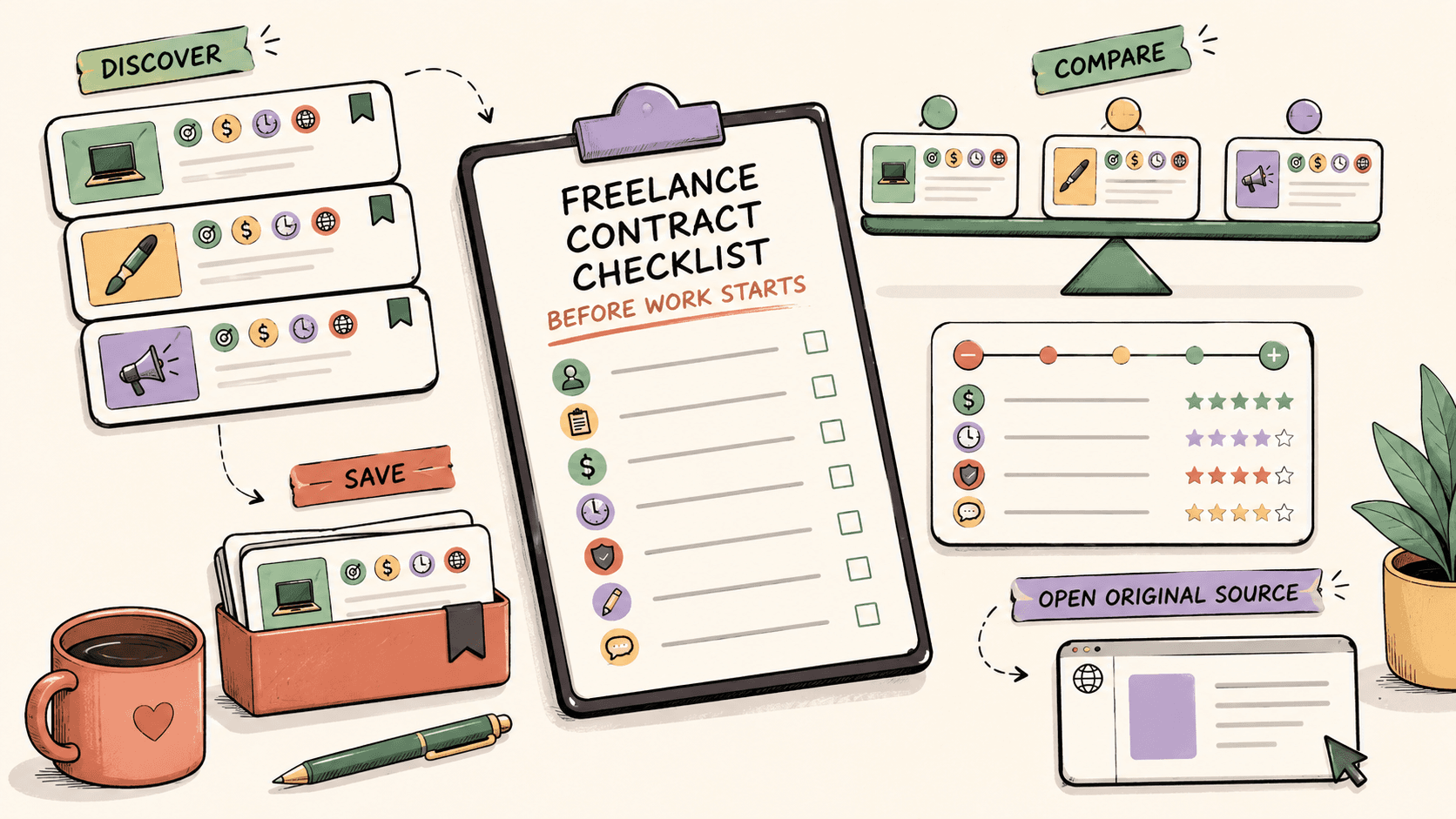
What should a freelance contract include?
A practical freelance contract usually covers:
- The names and contact details of the parties
- The project scope and deliverables
- Deadlines, milestones, and dependencies
- Fees, invoices, payment dates, and late-payment terms
- Revisions, approvals, and change requests
- Expenses and third-party costs
- Intellectual property ownership and usage rights
- Confidentiality and permitted disclosures
- Termination and cancellation terms
- Dispute handling and governing-law information, where appropriate
- Signatures and the contract date
The exact wording should fit the project and the jurisdictions involved. If the project involves substantial money, sensitive information, employment-like obligations, or complicated intellectual property, consider having a qualified local lawyer review the agreement.
1. Identify the client and freelancer
Start with the legal names of the people or businesses entering the agreement. Include an address or business address and a reliable contact method for each party.
If someone is signing on behalf of a company, identify the company and the person's role if relevant. Make sure the person requesting the work has authority to approve the project and arrange payment.
Also clarify whether the freelancer is acting as an independent contractor. The contract label alone does not determine legal status everywhere, so verify the rules that apply where the work is performed and where the client is located.
Find current openings on Sidequestboard
2. Define the scope and deliverables
The scope should describe the work specifically enough that both parties can recognize completion.
For example, a video-editing project might specify:
- The number and approximate length of edited videos
- Which source files the client will provide
- The editing style or required format
- Whether captions, thumbnails, or short clips are included
- The delivery format and file-transfer method
- The number of review rounds included
- What is outside the agreed scope
Avoid relying on phrases such as “help with marketing” or “design a website” without additional detail. If the project began with a proposal, brief, email, or statement of work, identify that document and attach or link to the final version.
3. Set deadlines, milestones, and dependencies
List the expected start date, milestone dates, delivery date, and final approval date when those dates are known. State whether the schedule depends on the client providing content, access, feedback, or approvals by a particular time.
A useful clause explains what happens when a dependency is late. For example, a missed client feedback deadline may move the delivery date by the same number of days, subject to the agreement's terms.
Do not promise a fixed deadline if the client has not supplied essential materials. Mark uncertain dates as estimates and explain what must happen before the work can proceed.
4. Explain fees and payment terms
The contract should make the price and payment process easy to understand. Specify:
- The total project fee or hourly, daily, or per-unit rate
- The currency
- The deposit or upfront payment, if any
- Milestone amounts and due dates
- The invoice method
- Accepted payment methods
- When an invoice is considered overdue
- Any agreed late-payment charge or collection process
For a $2,000 logo project, the contract might divide payment between an upfront amount, a draft milestone, and final delivery. The actual percentages and dates should be negotiated by the parties rather than copied without considering the project.
State whether work pauses when an invoice becomes overdue. Make sure any late-payment terms comply with applicable law.
5. Define revisions and approvals
Revision limits prevent an open-ended review process. Explain what counts as one revision round, how feedback should be consolidated, and how long the client has to respond.
You can also define an approval process:
- Who has authority to give final approval
- Which communication channel counts as written approval
- How many business days the client has to review a milestone
- What happens if the client does not respond
- Whether new requests after approval are treated as change requests
A revision clause should be reasonable for the type of work. A logo, article, software feature, and consulting engagement may need different review structures.
6. Handle scope changes with a change-order process
Projects often change after work begins. The contract should explain how additional work is requested, priced, and approved.
A simple process is:
- The client describes the requested change.
- The freelancer explains the effect on price, schedule, and deliverables.
- Both parties approve the change in writing.
- The freelancer begins the additional work after approval.
Do not treat a casual message as a binding change unless the contract says that message is sufficient. Keeping a written record reduces disputes about whether an extra task was included in the original fee.
7. Address expenses and third-party costs
Clarify whether the fee includes expenses such as stock assets, software, travel, contractors, hosting, printing, or paid research tools. State who selects and pays for third-party services.
If reimbursement is available, specify whether the client must approve an expense in advance and what receipts or records are required. If no expenses will be reimbursed, say so clearly rather than leaving the issue ambiguous.
8. Assign intellectual property and usage rights
Intellectual property terms should answer four questions:
- What work product is being delivered?
- When does the client receive ownership or usage rights?
- Is payment required before those rights transfer?
- Which materials remain the freelancer's property?
Separate final client work from pre-existing tools, templates, processes, code libraries, fonts, stock assets, and other third-party materials. The freelancer may need to grant a license for those materials rather than transfer ownership.
Also clarify whether the freelancer may display the work in a portfolio and whether the client must be credited. Copyright and other intellectual property rules vary by jurisdiction, so verify the agreement with an appropriate legal professional when the rights are valuable or complex.
9. Include confidentiality and data handling terms
Confidentiality provisions should identify the kind of information that must be protected, permitted uses, required security practices, and exceptions such as information that is already public or independently developed.
If the project involves customer data, login credentials, health information, financial information, or regulated data, address access, storage, deletion, and incident reporting. Use a separate data-processing or confidentiality agreement when the project requires one.
Do not promise security measures you cannot actually follow. Limit access to information that is necessary for the work and return or delete materials when the agreement requires it.
10. Explain termination and cancellation
A termination clause should state:
- Whether either party may end the agreement for convenience
- Whether notice is required
- What happens if one party materially breaches the contract
- Which completed work must be paid for
- Whether deposits are refundable
- How unfinished work and project files are handled
- Which clauses continue after termination
A cancellation policy should be clear before work starts. Consider the time reserved for the project and non-refundable third-party costs, while ensuring the terms are lawful and proportionate.
How can you screen a freelance opportunity before sending a contract?
The contract is only one part of the workflow. Before drafting terms, confirm that the opportunity is real, suitable, and worth pursuing.
When reviewing a public listing, check:
- The identity or history of the person or organization posting it
- A specific description of the work
- The expected deliverables and deadline
- The stated budget or a realistic way to discuss price
- The required application or response method
- Who can answer scope questions and approve the work
- Warning signs such as requests for unpaid production work, payment to apply, or unclear ownership demands
Different sources require different checks:
- Reddit: Review the poster's account history, subreddit rules, posting date, and any required application format. Treat comments and direct messages as separate communications until the opportunity is verified.
- X: Check whether the account has a consistent identity and whether the opportunity links to an official website, portfolio, or company profile. Confirm the response instructions in the original post rather than relying on reposts.
- Discord communities: Review the server rules, the poster's role, the relevant channel, and whether moderators or community history provide useful context. Keep a record of the original message before it disappears or is edited.
- Upwork and Contra: Review the client's profile, project brief, payment or profile signals available on the platform, and the platform's communication and contract rules before responding.
- LinkedIn and Wellfound: Compare the post with the person's or organization's public profile and company information. Confirm the decision-maker, role expectations, and application destination before sharing sensitive information.
Platform features, rules, and listing quality change over time. Open the original source and verify the current details before applying or sending a proposal.
For a repeatable discovery workflow, Sidequestboard can help bring eligible public opportunity listings into one feed. Save a promising listing there, then open the original source to verify the poster, scope, budget, deadline, and response instructions before contacting anyone.
What should you do before signing?
Use this final pre-start check:
- Both parties are correctly named.
- The scope and exclusions are written down.
- Deliverables have clear acceptance criteria.
- Dates account for client dependencies.
- Fees, invoices, deposits, and overdue payments are clear.
- Revision rounds and change requests are defined.
- Expenses and third-party costs are addressed.
- Ownership and portfolio rights are understood.
- Confidentiality and data handling obligations are realistic.
- Termination and cancellation consequences are documented.
- The person approving the work has authority to do so.
- Both parties have signed the same final version.
A practical path from opportunity to signed contract
Suppose you find a public post requesting a short brand video. First, open the original listing and check the poster, deliverables, budget, deadline, and application instructions. Save the opportunity in Sidequestboard while you compare it with other suitable leads.
Next, ask focused questions about source footage, target audience, aspect ratios, review rounds, ownership, and the person responsible for approval. If the answers make the project viable, send a proposal that reflects the agreed scope and price. Before editing begins, convert those terms into a written contract, obtain signatures, and collect any required upfront payment.
This sequence keeps discovery, screening, pitching, and contracting connected without treating every public post as a qualified project.
Final takeaway
A good freelance contract makes the expected work, money, timing, approvals, rights, and exit process visible before either party commits. Pair the checklist with careful opportunity screening: verify the original listing, ask questions, document the agreement, and keep records of approvals and changes.
Contract law differs by location and project type. Use official government or professional legal resources, or ask a qualified lawyer in the relevant jurisdiction, when you need advice about enforceability, taxes, worker classification, intellectual property, privacy, or dispute resolution.
Related guides
- How to Track Freelance Work from Niche Online Groups
- How to Save Freelance Leads Every Day Without Losing Good Opportunities
- How to Find, Save, and Track Freelance Leads as a Beginner
- How to Start a Freelance Graphic Design Business: Portfolio, Pricing, Clients, and Contracts
- How to Ask for a Raise Without Getting Fired: Scripts, Timing, and a Backup Plan
- Fiverr vs Upwork for Beginners: Which Is Better for Getting Your First Client?